

Sustainability at Gettysburg College
Sustainability at a glance
- In 2010, Gettysburg College committed to becoming Carbon Neutral by 2032 and has accomplished interim goals of 20 percent reduction by 2015 and 30 percent reduction by 2025.
- The Association for the Advancement for Sustainability in Higher Education (AASHE) recently recognized Gettysburg College for its commitment to and work in advancing sustainability through completing the Sustainability Tracking, Assessment & Rating System (STARS) reporting process and earning a STARS Gold rating.
- In the 2023 Campus Race to Zero Waste, Gettysburg College ranked No. 8 in the nation and No. 3 among schools our size for weight of recycling per person on campus. We also ranked highly for the percentage of recycling of all campus waste.
- The College offsets 100 percent of its electric consumption with Green-e-certified wind power.
- Fifty percent of campus waste is either recycled or reused.
- Our dining facilities recycle all glass, metal cans, plastic, and cardboard to minimize waste.
- Gettysburg College is included in The Princeton Review Guide to Green Colleges: 2025 Edition.
Our Vision
At Gettysburg College, we recognize our collective responsibility as stewards of the environment and our principle commitment as an institution of higher education toward education, research, and scholarship in this area.
On campus, we have witnessed a growing concern for our natural environment and an increased interest in how, as a community, we can come together with the central purpose of making Gettysburg a cleaner, greener, and more sustainable place.
To that end, over the years there have been a number of sustainable changes and operations enhancements made, both institutionally and individually, that have contributed to a greener Gettysburg. The College continually views how it operates with a lens for sustainability and anticipates ongoing enhancements; however, we can always be doing more, as a society, and as a College.
On this page:
Institutional Commitment
History
Gettysburg College signed the American College and Universities Presidents Climate Commitment in 2007 as a signatory member. This initial signing required the institution to commit to specific climate initiatives. These included:
- Completing an emissions inventory, conducted biennially
- Implementing an Energy Star Procurement Policy in which all residential appliances have energy star ratings
- Utilizing our Green Power purchasing credit
- Making our Climate Action Plan publicly available
- Establishing a Climate Change and Sustainability Committee
Climate Action Plan
A major part of signing the Campus Commitment was to develop a Climate Action Plan (PDF) that would guide the College to being climate neutral. In 2009, after receiving input from student organizations and Environmental Studies students, the College established 2032 as our date to be carbon neutral. This will coincide with the celebration of Gettysburg College’s 200th anniversary of its founding in 1832. Facilities Services is responsible for completing all progress updates and sending carbon footprint reports to Second Nature, to monitor our progress to neutrality. Interim goals of 20 percent reduction by 2015 and 30 percent reduction by 2025 have already been accomplished.
Climate Commitment
Oversight of all Climate Commitments are managed by the organization Second Nature. This includes managing our information regarding our biennial carbon footprint reporting and the Sustainability Tracking Assessment and Rating System (STARS) report and tracking our progress towards Carbon Neutrality by 2032.
Climate Change and Sustainability Committee
Fostering a forward-thinking atmosphere and an ongoing conversation about what Gettysburg College can do to continue reducing its carbon footprint, our newly reinstated Climate Change and Sustainability Committee will serve as the connection point for ideas and enhancements brought forth by our community of students, faculty, administrators, and staff.
Campus Initiatives
From substantially reducing the amount of waste produced at our dining locations, to offsetting energy consumption with the installation of solar panels and collecting rain water for irrigation on campus, Gettysburg College is making great strides toward reducing its carbon footprint.
Waste
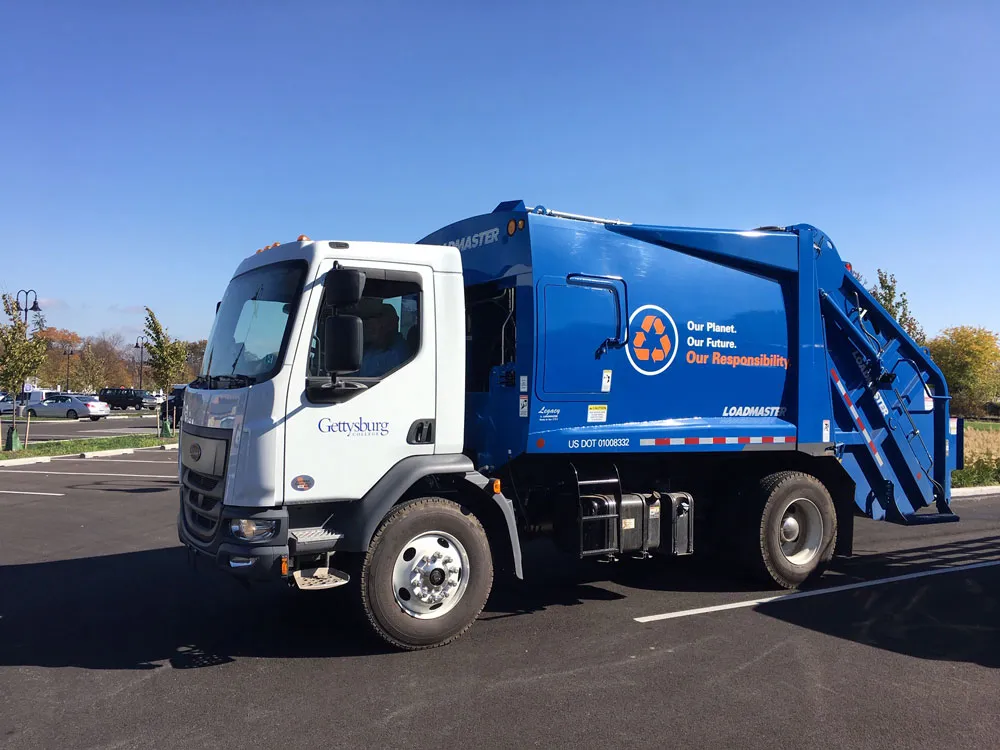
- Gettysburg College provides Single Stream recycling opportunities for the entire campus, which means all recyclables are collected into the same truck. This system makes recycling easy, as our recycling bins function similar to a trash can.
- We’ve rolled out a new recycling truck during the fall 2020 semester.
- A food waste dehydrator diverts approximately 1,400 pounds of post-consumer and kitchen waste weekly, turning it into a sterile bio-mass soil amendment that is used by Facilities Services in their compost pile. Extra product is delivered to Dickinson College for its bio-digester system.
- In an effort to reduce touch points on the water fountains, we installed 19 new bottle refill stations during the summer of 2020. This gives the college nearly 50 units in 27 buildings around campus. This includes at least one in each first-year residence hall and all academic buildings. The introduction of these units supports the College’s efforts to reduce the use of plastic water bottles and the use of rented office coolers on campus.
- Each May, departing students donate reusable items for our Give It Up for Good Sale. Since the program began in 2004, the annual sale has raised more than $300,000 for the United Way of Adams County, preventing approximately 420 tons of materials from entering the waste stream.
- Our tray-less dining contributes to reducing post-consumer food waste as well as the amount of serviceware that needs to be washed.
- The waste cooking oil from Dining is collected and made into biodiesel fuel.
Energy
- The Jaeger Center and the construction of the Janet Morgan Riggs (JMR) Student Center are Gold certified by the Leadership in Energy and Environmental Design (LEED) Green Building Rating System. This means that they use fewer resources, reduce waste and negative environmental impacts, and decrease life cycle costs.
- The roof of the Jaeger Center is also lined with solar panels that offset the energy consumption of the entire athletic facility by approximately 25 percent.
- New Energy Star appliances have replaced old refrigerators, microwaves, washers, and dryers in campus housing.
- Annual updates are made to LED lighting; roofs, windows, and insulation for building performance; and building systems to improve building efficiencies.
All new construction is planned with an eye toward conserving energy and improving building performance.


Water & Rain Water
- Campus bathroom facilities feature low flow fixtures, such as toilets and shower heads, to reduce water usage.
- Dining facilities reduces water consumption by 66 percent and reuses 95 percent of that water during operation by using a Waste Pro Pulper system.
- Steam and condensate line repairs are completed regularly to reduce water loss when heating systems are used in the winter months.
- The Jaeger Center features a rain storage tank that holds 15,000 gallons of stormwater that support campus irrigation.
- Breidenbaugh Hall and the Majestic Theater also use green roof systems to collect a portion of their rain water.
Transportation
- Since 1991, Gettysburg College has offered daily shuttle services to mass transit locations to reduce the need for personal vehicles, which in turn reduces our carbon footprint.
- In 2017, the shuttle service was extended to College employees.
- The College provides free use of the Freedom Transit shuttle service in town for all students and employees to access local businesses, medical centers, and tourist attractions.
- Four electric vehicle charging stations have been installed in the new Constitution West parking lot by the Central Energy Plant.
- If your travel needs are more basic, bicycle repair stations are available on campus for use by the general public.

Purple Martin super-colony
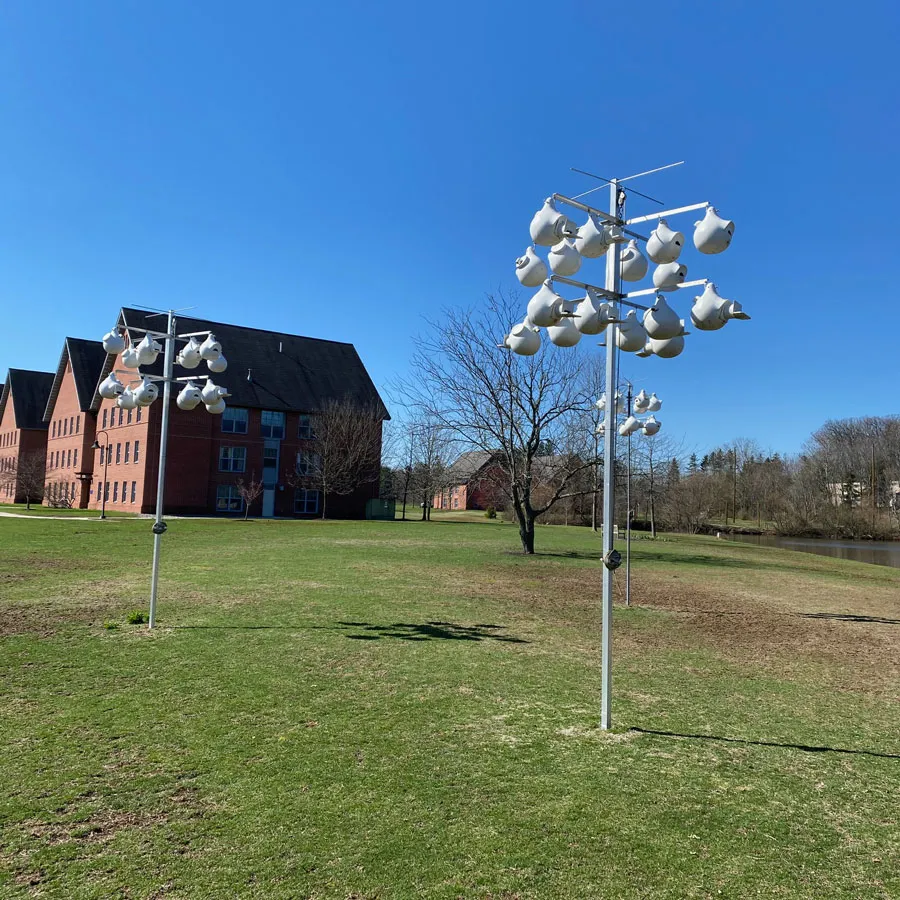
To further benefit the Gettysburg College campus, the Grounds Crew utilizes non-chemical solutions to minimize pest damage. Instead, the College utilizes a more natural approach: predators. A purple martin super colony, dwelling in the attractive birdhouses beside Quarry Pond, is responsible for greatly reducing the campus mosquito population. Additionally, ladybird beetles eat foliage-consuming aphids while praying mantis populations prey on damaging spider mites. Controlling these pests reduces the need for chemical pesticides.
However, when pesticides are necessary, the least toxic sprays available are selected and are used only in extreme conditions. This super colony was established by a Gettysburg Grounds employee in the mid 1990s. Even though the staff member has since retired, the department continues his efforts today by maintaining the colony.
Additionally, in 2020 the College received recognition from the South Mountain Audubon Society for the Purple Martin colony:
On behalf of the South Mountain Audubon Society, thank you very much for hanging the Purple Martin bird houses again this year. We know it has been a rough spring and that there are many important tasks that you have had to deal with this strange year and we are grateful that you were able to get the houses up in time for the return of the birds this year. It is important to our community that the flock of Purple Martins that nest here each summer be able to find their homes when they return each spring. They eat vast quantities of insects and contribute chemical-free insect control. Purple Martins are the largest swallows in North America and the colonies are almost 100 percent dependent on human-supplied housing. The hanging houses at the college are ideally sited next to the pond, which attracts numerous insects. These graceful birds primarily eat flying insects such as moths, gnats, flies, and mosquitoes, which they catch midair. After their chicks hatch, Purple Martin parents feed their babies up to 60 times a day. Both the male and females help feed the young birds.
The South Mountain Audubon Society is an independent 501(c)(3) non-profit organization affiliated with the National Audubon Society. It aims to conserve and restore natural ecosystems, focusing on birds, other wildlife, and their habitats for the benefit of humanity and the earth's biological diversity, focusing on Adams County. Our members thank you again for your continued role in supporting the local Purple Martin colony. Best wishes during this difficult time!
Sincerely,
Kathryn L. Gelner, Secretary
Programs
Campus Kitchen
Opening its doors in 2007, the Gettysburg College Campus Kitchen was the first kitchen of its kind in Pennsylvania. In the last 12 years, Campus Kitchen at Gettysburg College has served 60,361 meals to low-income families and senior citizens by recovering 128,279 pounds of food that would have otherwise gone to waste.

Farmhouse
As an on-campus housing option for students who are passionate about sustainability and social justice, Farmhouse helps them understand their role in the sustainability movement through various experiential learning opportunities.
Painted Turtle Farm
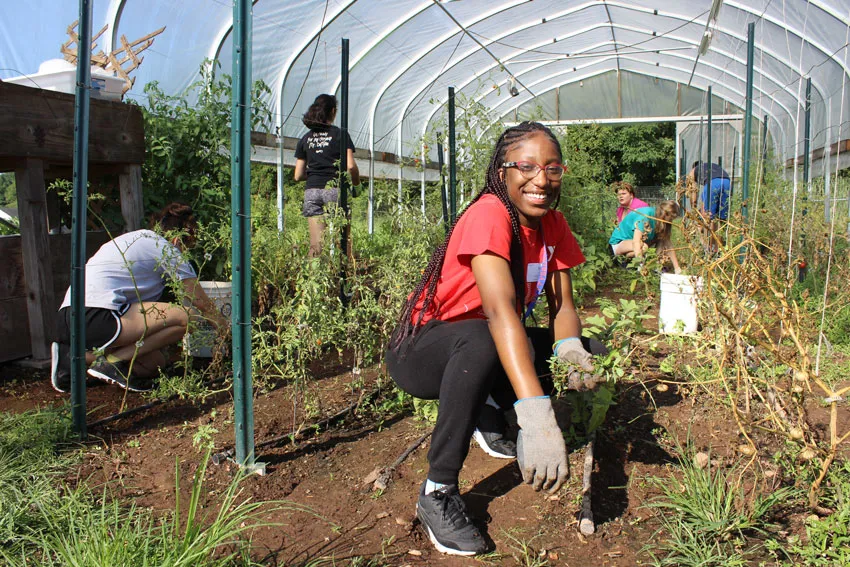
In 2013, the Painted Turtle Farm transitioned from an organic student garden into a Certified Naturally Grown community garden to meet the growing interest and need for food justice in Adams County. At the Painted Turtle Farm, students, faculty, and the local migrant community come together to address food access and exercise local, healthy eating.
Gettysburg College Environmental Concerns Organization
To continue to make positive impact on the environment and the local community, the Gettysburg College Environmental Concerns Organization is often involved with campus and community sustainability projects, environmental advocacy and awareness campaigns, and environmental restoration projects. It has been active on campus for more than 20 years.
The Student Sustainability Coalition
The Student Sustainability Coalition is a group of student leaders from the Center for Public Service, Gettysburg Environmental Concerns Organization, Farmhouse, Garthwait Leadership Center, the Environmental Studies Department, and other campus groups that come together to plan sustainability events on campus and share volunteer opportunities.
Partnerships for Sustainability
Partnerships for Sustainability is a Center for Public Service Program that addresses sustainability needs on campus and in the surrounding community. Student volunteers work with environmental nonprofits to plant trees, remove invasive species, and plan environmental education workshops among other conservation-related activities. On campus, the Program Coordinator for Partnerships for Sustainability facilitates dialogue and action between students, faculty, staff, and administration to advance sustainable policies and programs related to the College’s Climate Commitment and STARS Report.
Student Sustainability Interns
Body: Each summer, Facilities hires a full-time, paid Sustainability Intern to assist with Facilities’ sustainability operations. The Sustainability Intern helps implement and assess current programs, like the Give It Up for Good Sale and single-stream recycling. The Sustainability Intern also supports Facilities in updating the STARS Report and greenhouse gas inventory. Based on these reports, the Intern researches and develops new sustainability initiatives in partnership with Dining Services.
LEED Certification
Jaeger Center
- The Jaeger Center has been designed to use at least 27.8% less energy than it would with conventional materials and methods. This high performance-design decreases CO2 emissions by an estimated 2.4 million pounds annually.
- The Jaeger Center has installed white thermoplastic roof covering, which reduces the cooling costs for the building.
- As built, the Jaeger Center will use an average of 50% less water than a typical building with standard fixtures, which is equivalent to 215,175 gallons of water annually.
- The Jaeger Center has installed an innovative pool filtration system that allows for additional water use reductions beyond those previously mentioned. Total additional water reductions amount to more than 3.3 million gallons of water annually. These water reductions will also reduce the impact on municipal water treatment facilities.
- The landscaping surrounding the Jaeger Center consists of native and/or adaptive plants, which are capable of surviving in the Gettysburg climate without the need for irrigation.
- During construction, the Jaeger Center selected low-emitting products to improve the indoor air quality. Adhesive, sealant, paint, coating, composite wood/agrifiber products, and carpet material have been specified to meet South Coast Air Quality Management District and Green Label Plus guidelines, limiting the volatile organic compound content of the product.
- While the tally is not yet complete as construction is still wrapping up, it is anticipated that more than 90% of the construction waste from The Jaeger Center project will be diverted from landfills for beneficial reuse.
- To encourage alternative methods of transportation, bike racks have been installed outside the Jaeger Center that can accommodate 78 bicycles, and shower/changing rooms to accommodate those who bike to work or class.
- In order to encourage more efficient means of transportation, there will be two convenient parking spaces by the Jaeger Center for low emitting/fuel efficient vehicles, as well as two for car and van pools.
Gettysburg College has set aside 100,938 square feet of the campus-owned property adjacent to the building as protected space, not to be developed for the lifetime of the building.
Education and Impact
Gettysburgians of all backgrounds and careers are making a positive impact on the environment through a variety of endeavors, such as launching ecofriendly businesses, researching the impact of our digital footprint and other relevant topics, and using their voices to raise a general awareness in their communities. Read some of their stories.