

Sunderman Applied Study: Keyboard
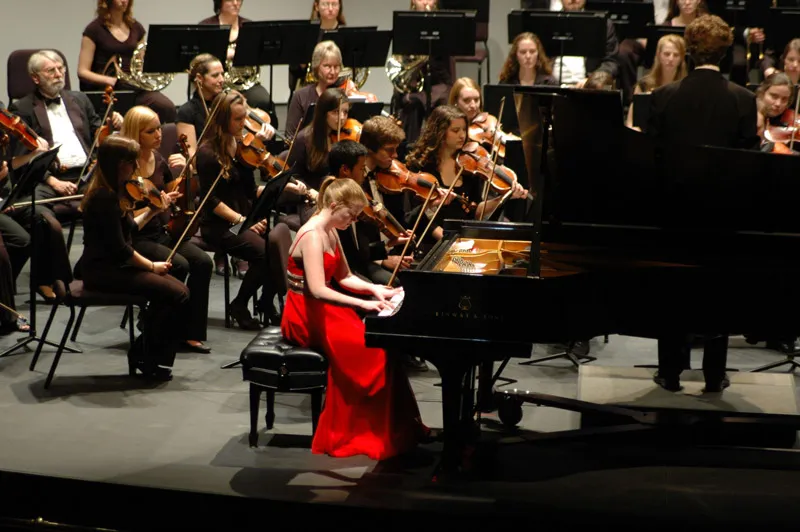
Piano training at the Sunderman Conservatory focuses on creative strategies for mindful, physically comfortable practice leading to the joyful, fearless, compelling performance of many different styles of music.
Sunderman Piano Citizens become whole pianists.
The whole pianist:
- performs joyfully and fearlessly
- has a beautiful tone
- plays with physical ease
- is a dynamic soloist
- is a sensitive chamber musician
- is a skilled collaborative pianist
- explores historical instruments and improvisation
- sight-reads comfortably
- practices effectively
- connects music to its artistic and cultural contexts
Performance Opportunities for Pianists
- weekly studio classes
- Now Hear This Friday afternoon recitals
- Piano Studio Project Recitals
- Piano Citizens Recitals
- Piano degree recitals
- Collaborative playing on other students’ degree recitals
- chamber music recitals
- musical theatre productions
- concerto competition
- chorus, orchestra and wind symphony concerts
- Notes at Noon concerts
- many other possibilities
Lessons
Applied lessons are at the heart of piano training. Piano majors (in BMus, BA, and BME degrees), and select other students by audition, have an hour lesson every week. Piano minors and non-majors have a weekly half-hour lesson. Each semester’s lessons culminate with a juried performance.
Studio Class
Studio class is held every week in Paul Recital Hall, where students perform on our beautiful Steinway D concert grand. Student performances with feedback make up the main activity of the class, but other elements include:
- mindfulness exercises;
- strategies for handling stage fright (ask about the Play Every Week Diet);
- effective practice techniques;
- stretches;
- movement exercises based on principles of Alexander Technique and Dalcroze Eurhythmics;
- other discussions about life as pianists and musicians.
The studio class is a supportive, non-competitive environment, and is the center of the strong community of “Sunderman Piano Citizens.” Pianists often eat dinner together, and every semester ends with a student party at Dr. Swigger’s house.
Piano Citizens Winter Break Book Club
Every year all the Piano Citizens read a book over winter break and then discuss it in the first week of the spring semester, often at a local coffee shop. Past books have included:
- Learn Faster, Perform Better: A Musician’s Guide to the Neuroscience of Practicing by Molly Gebrian
- What Every Pianist Needs to Know About the Body by Barbara Conable
- The Art of Practicing by Madeline Bruser
- The Talent Code: Greatness Isn’t Born, It’s Grown by Daniel Coyle
- The Inner Game of Tennis by Timothy Gallwey
- Practicing for Artistic Success: The Musician’s Guide to Self-Empowerment by Burton Kaplan
Studio Project Recitals
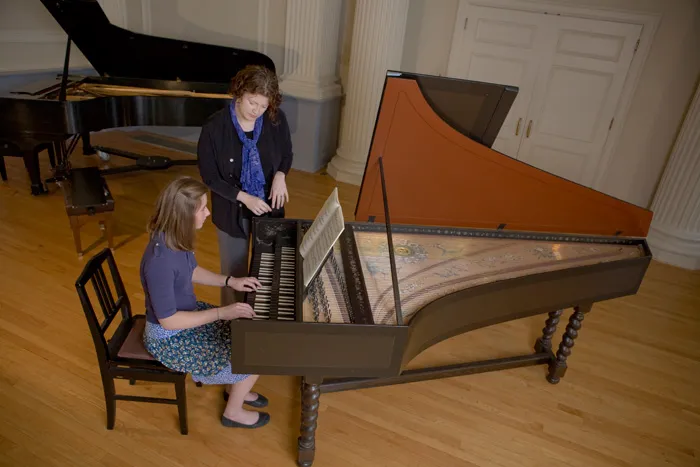
Every year, all the piano students perform in a studio project recital, on a four year cycle. Studio Project Recitals are informal and a chance to explore—with lots of help!—new ways of making music as a keyboard player.
Harpsichord
Improvised continuo playing on the harpsichord, from figured bass, in country dances from the 17th century, with guest musicians. This concert usually includes chaotic audience line-dancing.
Fortepiano
Music from the Classical Era on our Mozart-style fortepiano
Living Composers
Contemporary pieces by living composers with a multimedia performance element.
Jazz
Jazz from a chord chart, with guest jazz musicians including a drummer and a bass player
Collaborative Piano
Piano students have many opportunities for accompanying and chamber music. Pianists frequently bring their collaborative partners into their lessons and studio classes, and they often play collaborative pieces on their juries and degree recitals. The approach to collaborative playing and chamber music is inclusive and supportive.
Instruments
Pianos
The Sunderman Conservatory has beautiful pianos for students to play on. Lessons, studio classes, and recitals are all on Steinway grand pianos; so are many practice rehearsals and practice sessions. We also have a variety of other keyboard instruments available for practice and performance, including a harpsichord, fortepiano, organs, and a toy piano. Playing on historically accurate instruments gives invaluable insight into articulation, voicing, and pedaling, and all piano students are encouraged to practice and perform on them.
Harpsichord
Dual-manual harpsichord made by Willard Martin, in the French 17th century style. It is available for practice, rehearsals, and performances.
Fortepiano
Fortepiano made by Tom and Barbara Wolfe, a copy of a 1790 Viennese Walter piano (the kind Mozart used). Our fortepiano is the generous gift of Joyce and Bert Elsner, and is available for practice, rehearsals, and performances.
Toy Piano
Schoenhut 30-key baby grand toy piano for solo, chamber and orchestral pieces involving toy piano.
Organs
Gettysburg College has two pipe organs on campus. The main instrument, used for worship, concerts, private lessons and practice, is located in Christ Chapel. The chapel organ, designed by Virgil Fox, is a three manual Austin organ with 46 ranks of pipes. There is a smaller Moeller practice organ in the Schmucker Hall music building. The Moeller practice organ has two manuals. Students can take organ lessons and can major in organ or minor in organ.
Faculty
- Jocelyn Swigger, Area Coordinator
- Eric Byrd, Jazz Piano Instructor
- Scott Crowne, accompanist
- Tim Foster, accompanist
- Scott Frederick, organ
Ready to Do Great Work?
