

The Gettysburg Approach
The Gettysburg Approach is A Consequential Education in practice. Designed to benefit the whole student, throughout the entirety of their life and career, the Gettysburg Approach builds within every student knowledge and enduring skills to thrive in a world marked by change and adaptation.
Gettysburg Approach How it works

Knowledge
A breadth and depth of knowledge through a rigorous education in the liberal arts and sciences.
Enduring Skills
The development and deepening of enduring skills most valued by employers.
Advising Team
360 degrees of advising from a Personal Advising Team.
Guided Pathways
High-impact learning experiences situated within Guided Pathways.
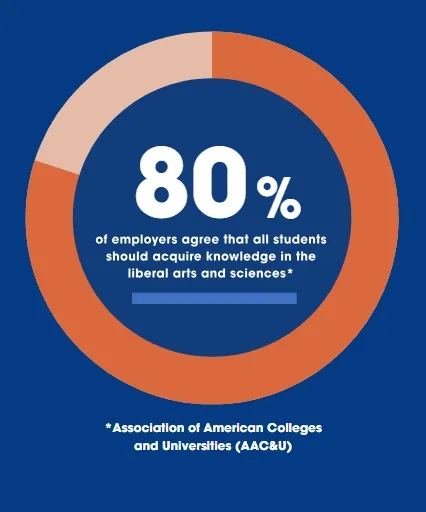
The first anchor in our Gettysburg Approach is knowledge, provided through a rigorous and contemporary education in the liberal arts and sciences. Our world-class faculty brings to life the arts, humanities, social sciences, and natural sciences, ensuring that Gettysburg students are exposed to viewpoints across disciplines and that they gain a nuanced understanding of the human experience.
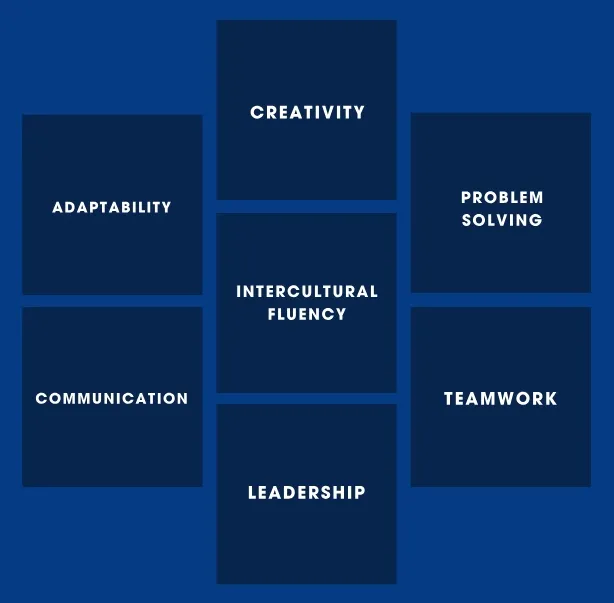
The second anchor in our Gettysburg Approach is an intensive focus on deepening the enduring skills most valued by employers and graduate schools. These skills include adaptability, communication, creativity, intercultural fluency, leadership, problem solving, and teamwork. These transcendent skills can be the hardest to teach, yet at Gettysburg College, they are woven into every experience—giving our students an advantage in their next step after college and every step thereafter.
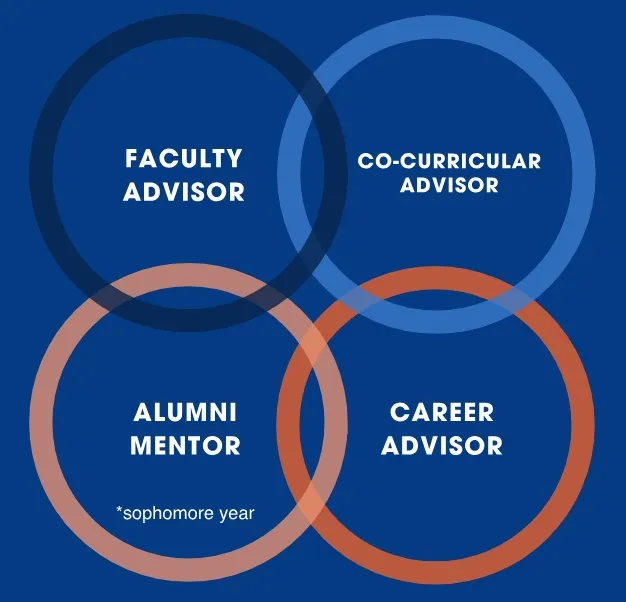
To ensure our students are getting the very most out of their Gettysburg education, they are supported by their own Personal Advising Teams. Comprised of a faculty advisor, co-curricular advisor, and career advisor, each student’s Personal Advising Team guides them through their academic progress and reflects with them as they navigate the Guided Pathways.
At the conclusion of their sophomore year, students have the option of adding an alumni mentor to their Personal Advising Teams who can assist them in defining their career goals and building their professional network.
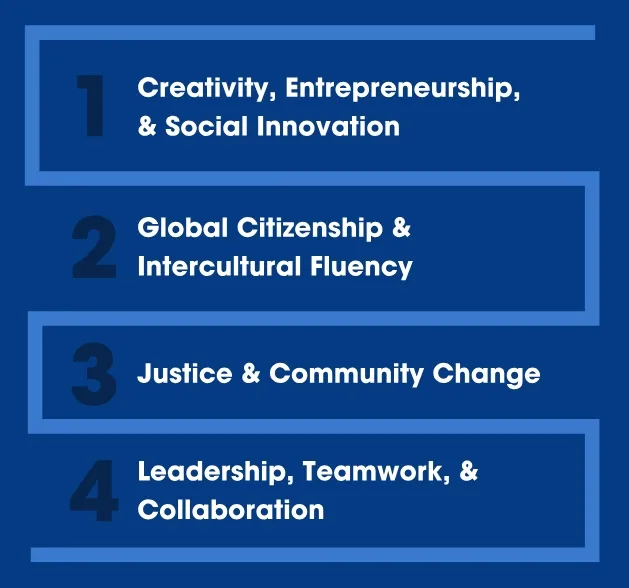
Knowledge and enduring skills at Gettysburg College are reinforced through our Guided Pathways: Creativity, Entrepreneurship, and Innovation; Global Citizenship and Intercultural Fluency; Justice and Community Change; and Leadership, Teamwork, and Collaboration. Students also participate in a foundational four-year Career Development Pathway that provides career-ready experiences such as internships, study abroad, and more.
Responding to the Preparedness Gap
The American Association of Colleges & Universities asked employers to identify the skills and aptitudes that are most valuable to them in the workplace.
Here’s what stands out: The surveyed employers stressed that while college graduates are prepared to succeed in entry-level positions, only half view today’s college graduates as having the necessary skills to advance or be promoted. In other words, they identified a preparedness gap—a significant divide between the importance employers are placing on specific skills and their assessment of a college graduate’s readiness to perform these skills effectively.
The Gettysburg Approach is our response to this preparedness gap.
A Proven Approach
A 2025 Career Readiness Survey found that Gettysburg graduates possess and outperform their peers in what employers define as “must-have” career skills.
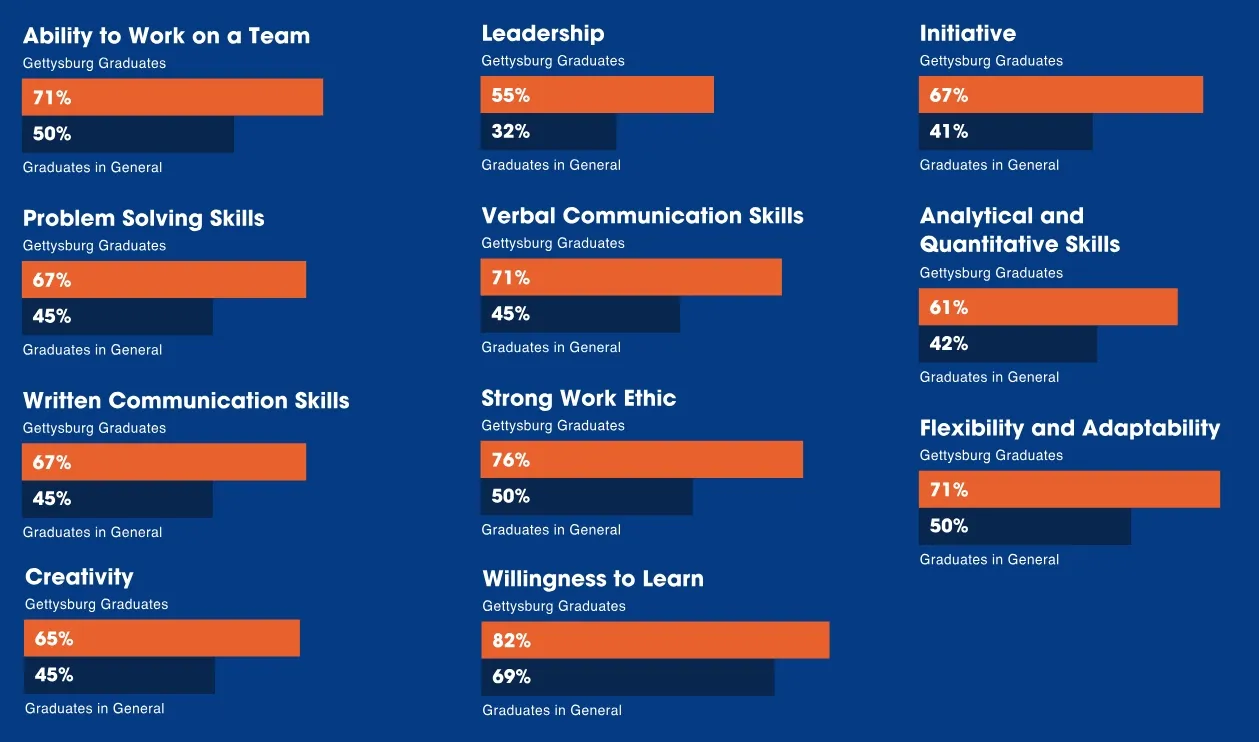
This bar chart compares the percentage of Gettysburg College graduates with the percentage of graduates in general across 11 career skills. Gettysburg graduates scored higher on every skill. The largest gap is in Leadership (23 percentage points), and the highest Gettysburg score is Willingness to Learn (82%).
| Skill | Gettysburg Graduates | Graduates in General |
|---|---|---|
| Ability to Work on a Team | 71% | 50% |
| Leadership | 55% | 32% |
| Initiative | 67% | 41% |
| Problem Solving Skills | 67% | 45% |
| Verbal Communication Skills | 71% | 45% |
| Analytical and Quantitative Skills | 61% | 42% |
| Written Communication Skills | 67% | 45% |
| Strong Work Ethic | 76% | 50% |
| Flexibility and Adaptability | 71% | 50% |
| Creativity | 65% | 45% |
| Willingness to Learn | 82% | 69% |