
Chemistry
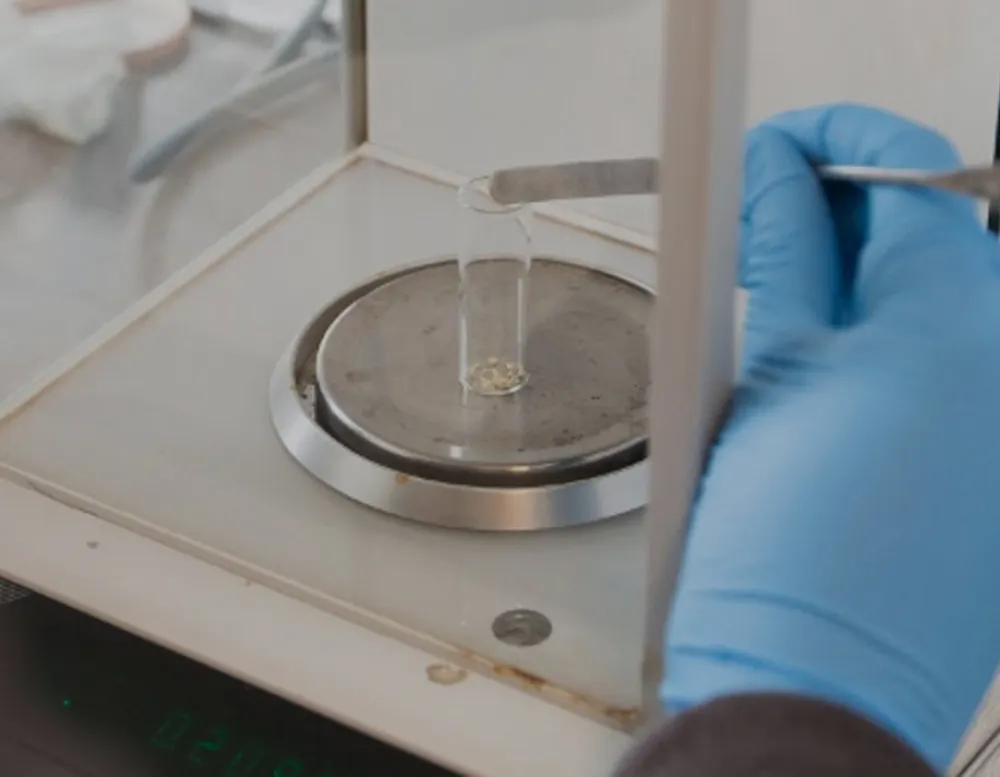
Understanding Chemistry means understanding the science of universe.
At Gettysburg College, our Chemistry and Biochemistry degrees will prepare you for a career in the sciences. You’ll work hands-on with our faculty engaging in research projects and gain a solid foundation in chemical theory and lab techniques.
Majors & Minors
| Program Name | Program Type | Tracks |
|---|---|---|
Chemistry |
Major Bachelor of Arts | |
Chemistry |
Major Bachelor of Arts |
Tracks
|
Chemistry |
Major Bachelor of Science | |
Chemistry |
Minor |
Why study Chemistry?
Chemistry isn’t just confined to the lab. With chemistry you’ll explore the connections between other fields such as biology, environmental science, and physics. This interdisciplinary approach broadens your understanding and enhances your problem-solving skills. With a Chemistry degree, you’ll be prepared for careers in a broad range of industries and including research and technology, pharmaceuticals, chemical engineering, biotechnology, or even forensic science!
Why study Chemistry at Gettysburg
Opportunities
You’ll have the opportunity to participate in interdisciplinary courses; faculty-mentored research; co-authorship with faculty on scientific publications; seminars by and discussions with speakers from academia, industry, and government labs; a summer research program with over 50 students in the sciences from all across campus; and regional and national conferences where you will present your research findings.
As a graduate of this program, you’ll obtain strong problem solving and quantitative skills that will prepare you for graduate study in chemistry or biochemistry, medical and dental schools, industrial and government research laboratories, secondary school teaching, or careers in a broad range of fields.

Academics
Gettysburg College offers a diverse range of chemistry and biochemistry courses. In Chemical Structure and Bonding you will study fundamental chemical principles focusing on properties of matter and theories of chemical bonding, atomic and molecular structure and chemical reactions. In Organic Chemistry, you’ll explore the chemistry of carbon compounds, with emphasis on molecular structure, stereochemistry, and the application of spectroscopy to the structure of organic compounds. Our Physical Chemistry courses will take you deep into quantum mechanics, spectroscopy, and molecular reaction dynamics, and their application to chemical systems through the use of problems, lectures, readings, discussions, and laboratory investigations.

Community of Experts and Professors
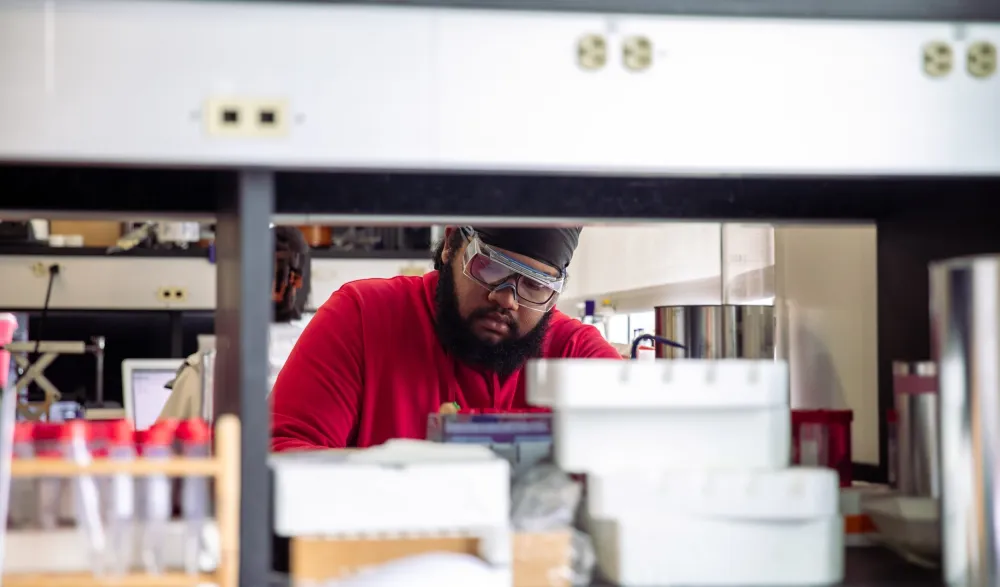
Gettysburg is the right choice for students who seek hands-on access to professional lab instruments and a prefer learning by doing. At Gettysburg we emphasize experiential learning. From your first year, you’ll engage in laboratory work using cutting-edge instruments and techniques. Our small class sizes ensure that you receive personalized attention and mentorship from our dedicated faculty. The Chemistry and Biochemistry department emphasizes collaborative research with faculty members, frequently leading to publications in scholarly journals and presentations at scientific meetings. Stipends for summer research are also available from the endowed Albaugh Fund or through external research grants. In past summers as many as fourteen students have stayed on campus and worked on summer research projects in the Department of Chemistry & Biochemistry.

Studying chemistry at Gettysburg College is more than mastering formulas and reactions—it's about discovering how science can shape the world.
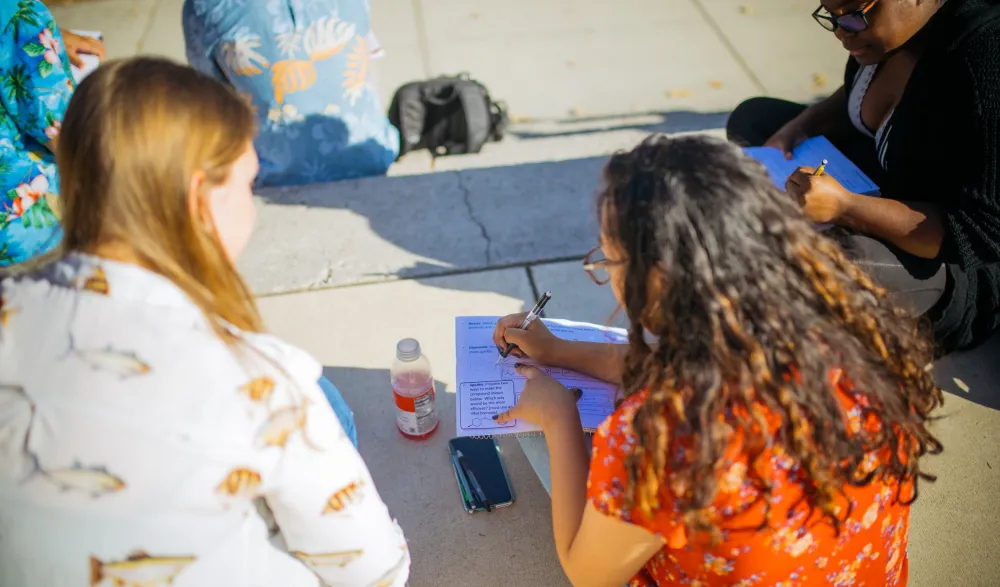
In our tight-knit, hands-on learning environment, students learn chemistry by doing chemistry. From day one, you’ll have access to advanced instrumentation typically reserved for graduate students, and you’ll apply what you learn through research, collaborative projects, and experiential labs.
Featured Courses
Visit Curriculum tab for a comprehensive list of all available courses
100 Level
Study of fundamental chemical principles focusing on properties of matter and theories of chemical bonding, atomic and molecular structure and chemical reactions. This material will be taught through the lens of a specific theme and highlight applications to convey how chemistry is used to resolve current questions in science. Laboratory experiments are designed to offer a hands-on familiarity with the principles discussed in the lectures. Fall semester. Three class hours and one laboratory. Students registering for CHEM 107 must take the Chemistry Placement Exam.
200 Level
Understanding the different subfields of chemistry and the implications of each of those fields on society. This course covers topics ranging from historical development of the field to the medical, environmental, and industrial applications of chemistry on modern society. The laboratory is focused on problem-solving—students refine their hands-on skills, develop independence, and design experiments—and culminates in an independent project. Three class hours and one laboratory. Spring semester. Prerequisite: CHEM 203; Recommended co-requisite CHEM 204.
300 Level
Detailed study of the structure and function of macromolecules and macromolecular assemblies as they pertain to living organisms. Topics include the structure and chemistry of proteins; the mechanisms and kinetics of enzyme catalyzed reactions; and the structure, chemistry, and functions of carbohydrates, lipids, nucleic acids, and biological membranes. Classic and modern bioanalytical methods are emphasized. Fall semester. Prerequisite: CHEM 204. Three class hours and one laboratory. CHEM 333 and BMB 333 are cross-listed.
Chemistry News
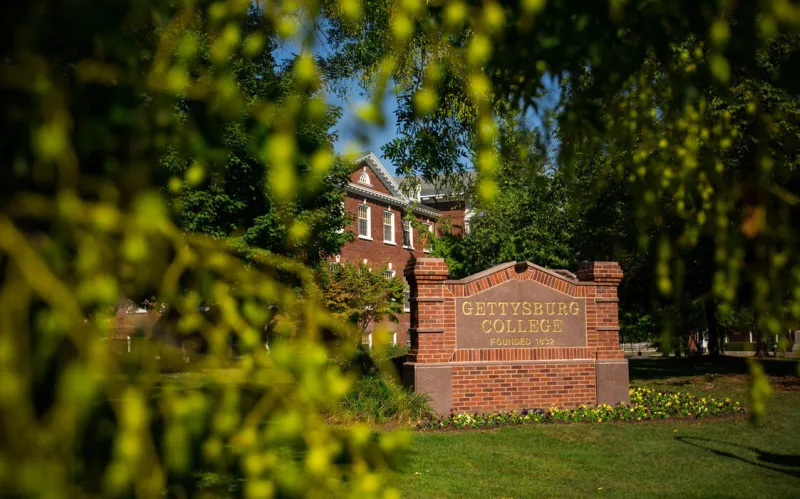
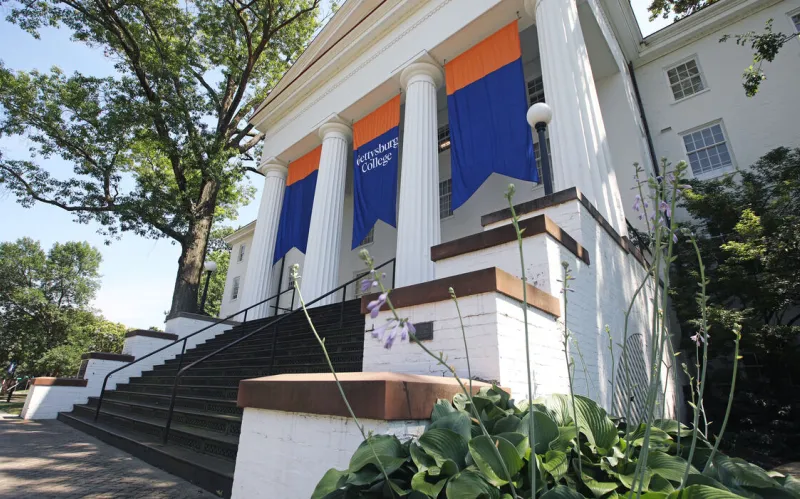
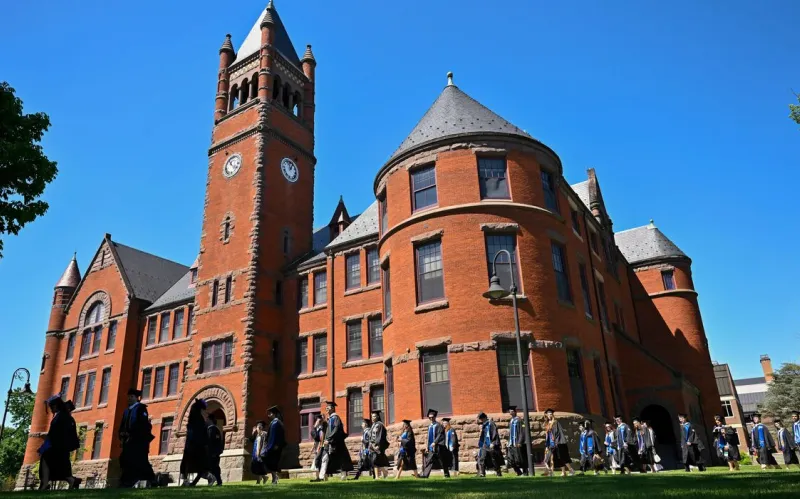
One of the most distinctive aspects of the chemistry curriculum is the opportunity for students to engage in faculty-mentored research as early as their sophomore year.
Whether through the Cross-Disciplinary Science Institute (X-SIG), summer research fellowships, or for-credit independent study, students often co-author publications and present at national conferences. The department also hosts regular seminar series, inviting prominent guest speakers and giving students a window into current trends and careers in chemistry and related fields.
Gettysburg's emphasis on undergraduate teaching ensures small class sizes and direct access to state-of-the-art instrumentation—tools typically reserved for graduate students at larger institutions. Courses integrate inquiry-based laboratory experiences, and upper-level electives allow students to explore topics like biochemistry, environmental chemistry, and inorganic materials. Whether you plan to pursue graduate school, enter the health professions, teach, or work in industry, Gettysburg’s chemistry curriculum provides a rigorous and rewarding foundation.
Major and Minor Information
Twelve courses, eight in Chemistry, are required for the Chemistry major, Bachelor of Arts.
Eight Chemistry Courses
- CHEM 107 Chemical Structure & Bonding
- CHEM 108 Chemical Reactivity
- CHEM 203 Organic Chemistry 1: Structure and Mechanism
- CHEM 204 Organic Chemistry 2: Reactivity and Chemical Synthesis
- CHEM 222 Chemistry: Contemporary Issues & Practices
- CHEM 305 Physical Chemistry 1: Chemical Thermodynamics & Kinetics or CHEM 307 Biophysical Chemistry
- CHEM 306 Physical Chemistry 2: Quantum Chemistry and Spectroscopy, can be taken in place of CHEM 305, but MATH 211 is a pre-requisite for CHEM 306.
- Two additional CHEM courses at the 200, 300, or 400-level, at least one must be a lab only course.
Four Courses from Other Departments
- PHY 109 Introductory Physics I
- PHY 110 Introductory Physics II
- MATH 111 Calculus I
- MATH 112 Calculus II
Notes:
- Students intending to take Chemistry 107/108 must take a placement test prior to enrolling in Chemistry 107. Chemistry 107-I and Chemistry 108-I, which provide students with extra support through weekly recitation sections, count as the equivalent to Chemistry 107 and Chemistry 108.
NEW! – Major in Chemistry with a concentration in Biochemistry
The study of biochemistry explores the structure and function of biological molecules such as proteins, carbohydrates, and lipids, and how they interact with each other to support life. Gettysburg College students now have the opportunity to focus on Biochemistry while earning a B.A. degree in Chemistry. The Biochemistry concentration has all the advantages of a traditional program in Chemistry at Gettysburg College – hands on access to professional lab equipment, experiential learning and excellent opportunities for student-faculty research – with an emphasis on the chemistry of molecular processes within living organisms. Over the past several decades, the field of chemistry has witnessed the emergence of biochemistry as “the” sub-discipline of chemistry. Traditional branches of chemistry have central themes devoted to the study of biomolecules: bio-organic chemistry, bio-inorganic chemistry, bio-analytical chemistry and bio-physical chemistry. This evolution is mirrored in the direction our major curriculum has taken in the last several years and by the research interests and training of our faculty. Students with a Biochemistry concentration will be well suited to go on to a variety of career paths including biotechnology, bioanalytical chemistry, medical device sales, the chemical industry, or on to professional school for medicine, dentistry, pharmacy, or law.
Eight Chemistry Courses
- CHEM 107 Chemical Structure & Bonding
- CHEM 108 Chemical Reactivity
- CHEM 203 Organic Chemistry 1: Structure and Mechanism
- CHEM 204 Organic Chemistry 2: Reactivity and Chemical Synthesis
- CHEM 333 Biochemistry 1
- CHEM 334 Biochemistry 2
- Two additional CHEM courses at the 200, 300, or 400-level
Four Courses from Other Departments
- PHY 103/109 Elementary/Introductory Physics I
- PHY 104/110 Elementary/Introductory Physics II
- BIO 111 Introductory Biology for Life Sciences
- BIO 112 Form and Function in Living Organisms
- MATH 111 Calculus I
- MATH 112 Calculus II (or MATH 107 Stats)
Seventeen courses, twelve in Chemistry, are required for the Chemistry major, Bachelor of Science.
Twelve Chemistry Courses
- CHEM 107 Chemical Structure & Bonding
- CHEM 108 Chemical Reactivity
- CHEM 203 Organic Chemistry 1: Structure and Mechanism
- CHEM 204 Organic Chemistry 2: Reactivity and Chemical Synthesis
- CHEM 222 Chemistry: Contemporary Issues & Practices
- CHEM 305 Physical Chemistry 1: Chemical Thermodynamics & Kinetics or CHEM 307 Biophysical Chemistry
- CHEM 306 Physical Chemistry 2: Quantum Chemistry and Spectroscopy
- Two 300-level advanced laboratories courses. Choose from the Integrated Labs (345-357) and the X-labs (358 and 359)
- CHEM 375 Advanced Inorganic Chemistry
- CHEM 410 Senior Research Seminar
- One additional CHEM course at the 200, 300, or 400-level
Five Courses from Other Departments
- PHY 109 Introductory Physics I
- PHY 110 Introductory Physics II
- MATH 111 Calculus I
- MATH 112 Calculus II
- MATH 211 Multivariable Calculus
Notes
- Students intending to take Chemistry 107/108 must take a placement test prior to enrolling in Chemistry 107. Chemistry 107-I and Chemistry 108-I, which provide students with extra support through weekly recitation sections, count as the equivalent to Chemistry 107 and Chemistry 108.
- Students who wish to pursue an American Chemical Society accredited degree must take either CHEM 333 Biochemistry 1 or CHEM/ BIO 334 Biochemistry 2 as a part of the Bachelor of Science degree.
All B.S. requirements are required for ACE Certified Degree, plus Chem 333 or CHEM/BIO 334
Twelve Chemistry Courses
- CHEM 107 Chemical Structure & Bonding
- CHEM 108 Chemical Reactivity
- CHEM 203 Organic Chemistry 1: Structure and Mechanism
- CHEM 204 Organic Chemistry 2: Reactivity and Chemical Synthesis
- CHEM 222 Chemistry: Contemporary Issues & Practices
- CHEM 305 Physical Chemistry 1: Chemical Thermodynamics & Kinetics or CHEM 307 Biophysical Chemistry
- CHEM 306 Physical Chemistry 2: Quantum Chemistry and Spectroscopy
- Two 300-level advanced laboratories courses. Choose from the Integrated Labs (345-357) and the X-labs (358 and 359)
- CHEM 375 Advanced Inorganic Chemistry
- CHEM 410 Senior Research Seminar
- One additional CHEM course at the 200, 300, or 400-level
One Additional Chemistry Course
- CHEM 333 Biochemistry 1
- CHEM 334 Biochemistry 2
Five Courses from Other Departments
- PHY 109 Introductory Physics I
- PHY 110 Introductory Physics II
- MATH 111 Calculus I
- MATH 112 Calculus II
- MATH 211 Multivariable Calculus
Notes
- Students intending to take Chemistry 107/108 must take a placement test prior to enrolling in Chemistry 107. Chemistry 107-I and Chemistry 108-I, which provide students with extra support through weekly recitation sections, count as the equivalent to Chemistry 107 and Chemistry 108.
- Students who wish to pursue an American Chemical Society accredited degree must take either CHEM 333 Biochemistry 1 or CHEM/ BIO 334 Biochemistry 2 as a part of the Bachelor of Science degree.
Six courses are required for the CHEM minor.
Two Core Courses
- CHEM 107 Chemical Structure & Bonding
- CHEM 108 Chemical Reactivity
Four Chemistry Elective Courses at the 200-level or above
- Three CHEM courses at the 200-level or above
- One CHEM course at the 300-level or above
Notes
- If CHEM/ BIO 334 is used to meet the requirement of a major in Biology, it may not also be used to satisfy course requirements for a Chemistry minor.
- Courses taken under the S/U grading option do not count toward the minor.
First Year Advising and Registration recommendations
Before you register
- The Chemistry Placement Exam is required to enroll in CHEM 107. Access it through the First-Year Dashboard. If the Dashboard has closed, contact Prof. Greg Hershey Suryn for access.
- Chemistry 107-I is an “intensive” section with its own labs and discussion sections designed to provide extra support for students with limited chemistry and quantitative problem-solving experience in high school. All Chemistry 107 sections prepare students to be successful in STEM majors.
- Placement results will be sent to your Gettysburg College email a few days before registration, indicating whether to enroll in CHEM 107-I or a standard section.
- CHEM 107/107-I is strongly recommended for prospective Biology, BMB, Chemistry, Environmental Studies (BS), and Health Sciences (BS) majors, as well as students interested in molecular biology or research.
- Please note that most health professional programs (medical, dental, optometry, veterinary, nursing, physician assistant, physical therapy, pharmacy, etc.) require at least one full year of chemistry.
- Students planning to attend medical, dental, or veterinary school directly after college (no gap year) ought to take CHEM 107 in their first semester.
Recommended first-year courses
Fall
- CHEM 107 (or 107-I) Chemical Structure and Bonding
- MATH 111 Calculus I (or higher)
Spring
- CHEM 108 (or 108-I) Chemical Reactivity
- MATH 112 Calculus II (or higher)
CHEM 107-I is an intensive section with an extra discussion period, designed for students with limited chemistry or quantitative problem-solving experience in high school. All sections prepare students equally well for STEM majors.
Available Courses
100 Level
Covers the fundamental principles of chemical reactivity, including kinetics, equilibrium, electrochemistry and thermodynamics. This material will be taught through the lens of a specific theme and highlight applications to convey how chemistry is used to resolve current questions in science. Laboratory work is designed to illustrate and complement materials discussed in class. Spring semester. Three class hours and one laboratory. Prerequisite: CHEM 107 or CHEM 107 – I.
Study of fundamental chemical principles focusing on properties of matter and theories of chemical bonding, atomic and molecular structure and chemical reactions. This material will be taught through the lens of a specific theme and highlight applications to convey how chemistry is used to resolve current questions in science. Laboratory experiments are designed to offer a hands-on familiarity with the principles discussed in the lectures. Fall semester. Three class hours and one laboratory. Students registering for CHEM 107 must take the Chemistry Placement Exam.
200 Level
Study of the fundamental concepts of the chemistry of carbon compounds, with emphasis on molecular structure, stereochemistry, and the application of spectroscopy to the structure of organic compounds. The reactivity of organohalides, alkenes, and aromatic molecules is discussed. Three class hours, one lab discussion hour, and one laboratory. Fall semester. Prerequisite: CHEM 108.
Continuation of Chemistry 203 with an emphasis on the reactivity of carbonyl compounds, cyclic compounds, and biological molecules such as amino acids, carbohydrates, and peptides. Strategies for design of multistep chemical syntheses are also discussed. Three class hours, one lab discussion hour, and one laboratory. Spring Semester. Prerequisite: CHEM 203.
Understanding the different subfields of chemistry and the implications of each of those fields on society. This course covers topics ranging from historical development of the field to the medical, environmental, and industrial applications of chemistry on modern society. The laboratory is focused on problem-solving—students refine their hands-on skills, develop independence, and design experiments—and culminates in an independent project. Three class hours and one laboratory. Spring semester. Prerequisite: CHEM 203; Recommended co-requisite CHEM 204.
The course is designed to provide a basic familiarity with the most common techniques used in structural biology and their applications to challenging biochemical, biotechnology and medical problems. Course focuses on current state-of-the-art biophysical methods that are being applied to study structure and function of biological macromolecules and biological systems with a focus on the most informative methods, such as X-ray crystallography, NMR spectroscopy, and single molecule techniques. Theoretical underpinnings and the practical applications are covered. Three class hours. Spring semester. Prerequisite: CHEM 108, or either PHYS 110 or PHYS 211, or permission from the instructor
Quarter credit internship graded S/U. Students must consult with faculty member with whom they are interested in working prior to the semester they enroll in CHEM 290. Fall and Spring semesters. Prerequisite: Permission of instructor.
300 Level
Upper-level chemistry laboratory course emphasizing analytical techniques and integrating concepts and methods from at least two of the following: biochemistry, inorganic chemistry, organic chemistry, and physical chemistry. Students undertake in-depth research projects to solve complex problems using approaches across chemical disciplines. Skills including literature searching, experimental design, implementation of research plans, and data analysis are highlighted, and the projects culminate in oral and written presentations. Lab only course, meets two afternoons per week. Pre-requisite: Chemistry 204.
Study of group theory, coordination chemistry, and organometallic chemistry. Topics include symmetry, molecular orbitals, crystal and ligand field theories, electronic transitions, catalysis, bioinorganic chemistry, and will highlight the work of inorganic chemists from traditionally underserved populations Spring semester. Prerequisite: CHEM 204
Combined upper-level biology and chemistry laboratory where students design and synthesize organic compounds and determine the impact of structural modifications on these compounds’ biological activity. The semester is divided into two parts: the synthesis, isolation, and characterization of a derivative of a known, biologically active organic compound; and the assessment of its biological activity using in vivo disease models. Capstone course for Biology majors. Two laboratories. Spring semester. Prerequisite: CHEM 204 and BIO 211 or permission of the instructor.
Combined upper-level chemistry and physics lab designed to emphasize the use of tools in these disciplines to answer questions in biology. This course concentrates on the role of lipids (fats) and ions (salt) in biology. Utilizing multiple biochemical and biophysical techniques, students will perform multiple experiments to ultimately answer a complex biological problem. Two laboratories. Spring semester. Prerequisite: CHEM 108 and either PHY 110 or PHY 211, or permission from the instructor.
Upper-level chemistry laboratory course emphasizing analytical techniques and integrating concepts and methods from at least two of the following: biochemistry, inorganic chemistry, organic chemistry, and physical chemistry. Students undertake in-depth research projects to solve complex problems using approaches across chemical disciplines. Skills including literature searching, experimental design, implementation of research plans, and data analysis are highlighted, and the projects culminate in oral and written presentations. Lab only course, meets two afternoons per week. Pre-requisite: Chemistry 204.
Upper-level chemistry laboratory course emphasizing analytical techniques and integrating concepts and methods from at least two of the following: biochemistry, inorganic chemistry, organic chemistry, and physical chemistry. Students undertake in-depth research projects to solve complex problems using approaches across chemical disciplines. Skills including literature searching, experimental design, implementation of research plans, and data analysis are highlighted, and the projects culminate in oral and written presentations. Lab only course, meets two afternoons per week. Pre-requisite: Chemistry 204.
Upper-level chemistry laboratory course emphasizing analytical techniques and integrating concepts and methods from at least two of the following: biochemistry, inorganic chemistry, organic chemistry, and physical chemistry. Students undertake in-depth research projects to solve complex problems using approaches across chemical disciplines. Skills including literature searching, experimental design, implementation of research plans, and data analysis are highlighted, and the projects culminate in oral and written presentations. Lab only course, meets two afternoons per week. Pre-requisite: Chemistry 204.
Detailed survey of the primary and secondary metabolic processes in living cells. Topics discussed include the overall organization of metabolic pathways, carbohydrate and fatty acid metabolism, biological oxidation and reduction and energy production. Special attention is given to regulation, hormone action, metabolic disorders and disease. Laboratory work includes an independent research project. Three class hours and one laboratory. Spring semester.
BIO 334, BMB 334, and CHEM 334, are cross-listed.
Detailed study of the structure and function of macromolecules and macromolecular assemblies as they pertain to living organisms. Topics include the structure and chemistry of proteins; the mechanisms and kinetics of enzyme catalyzed reactions; and the structure, chemistry, and functions of carbohydrates, lipids, nucleic acids, and biological membranes. Classic and modern bioanalytical methods are emphasized. Fall semester. Prerequisite: CHEM 204. Three class hours and one laboratory. CHEM 333 and BMB 333 are cross-listed.
Synthesis, properties, and characterization of materials. Topics include mechanical, electrical, and optical properties, synthesis and fabrication of materials including semiconductors and nanoparticles, surface chemistry, surface sensitive spectroscopies, electron and probe microscopies, and applications of these materials in advanced technology. Three class hours. Spring semester.
Prerequisite: CHEM 203, or instructor permission
Study of chemical analysis by use of modern instruments. Topics include complex equilibria, electroanalytical methods, quantitative spectroscopy, chromatography, and other chemical analysis methods. Analytical techniques will be studied from both a chemical and an instrumental point of view. The laboratory stresses quantitative analytical procedures and includes an independent project. Three class hours and one laboratory. Fall semester. Prerequisite: CHEM 108
Introduction to biophysical chemistry, with emphasis on thermodynamics, hydrodynamics, and spectroscopy using lectures, readings, problems, and discussions. Both theoretical underpinnings and the practical applications of commonly used experimental and computational techniques are covered. Three class hours, one discussion hour. Prerequisites: CHEM 108, PHYS 110, and MATH 112; or permission of instructor. CHEM 307 and BMB 307 are cross-listed.
Introduction to theories of quantum mechanics, spectroscopy, and molecular reaction dynamics, and their application to chemical systems through the use of problems, lectures, readings, discussions, and laboratory investigations. Three class hours, and one discussion hour. Prerequisites: CHEM 108, PHYS 110, and MATH 211 or permission of instructor.
Study of the principles of classical and statistical thermodynamics and chemical kinetics as applied to the states of matter, chemical reactions and equilibria using lectures, readings, problems, discussions, and laboratory exercises. Computers are used as a tool for solving problems and for the analysis of experimental data. Three class hours, and one discussion hour. Prerequisites: CHEM 108, PHYS 110, and MATH 112 or permission of instructor.
Study of synthetic, mechanistic, and theoretical concepts in organic chemistry. Particular emphasis is on the study of methods used to determine organic reaction mechanisms, stereospecific reactions, pericyclic reactions, and the design of multistep syntheses of complex molecules. Three class hours. Fall semester. Prerequisite: CHEM 204.
400 Level
Summer Internship graded S/U, counting in the minimum requirements for a major or minor only with written permission filed in the Registrar's Office
Summer Internship graded A-F, counting in the minimum requirements for a major or minor only with written permission filed in the Registrar's Office.
Internship not counting in the minimum requirements in a major or minor, graded S/U
Internship counting toward the minimum requirements in a major or minor, graded S/U
Internship counting toward the minimum requirements in a major or minor, graded A-F
Funded eight to ten week independent investigation in an area of mutual interest to the student and research director. Project normally includes both a literature and a laboratory study. Oral reports to staff and students and a final written thesis are required. Students wishing to enroll should consult with a chemistry department faculty member early in the spring semester.
Individualized research not counting in the minimum requirements in a major or minor graded S/U
Individualized research not counting in the minimum requirements in a major or minor, graded A-F
Individualized research counting toward the minimum requirements in a major or minor, graded S/U
Independent investigation in an area of mutual interest to the student and faculty director. Project normally includes both a literature and a laboratory study. An oral report to staff and students and a final written thesis are required. A student wishing to enroll in this course should consult with the faculty director at least two weeks before the end of the semester preceding the semester in which this course is to be taken. Open to junior and senior chemistry majors. Offered both semesters.
Individualized tutorial counting toward the minimum requirements in a major or minor, graded S/U
Individualized tutorial counting toward the minimum requirements in a major or minor, graded A-F
Senior research seminar for all Chemistry majors and for BMB majors doing research in the Chemistry Department. Students perform independent research projects, present their results in oral presentations, compose a senior thesis, critique their classmates’ and their own work, and take part in literature discussions. A student who plans to receive credit for independent research supervised in the Chemistry Department as part of the Chemistry or BMB major should register for this course in the spring semester of the senior year. Spring semester.
Chemistry & Biochemistry
More In Chemistry
Ready to Do Great Work?
