
Cinema and Media Studies
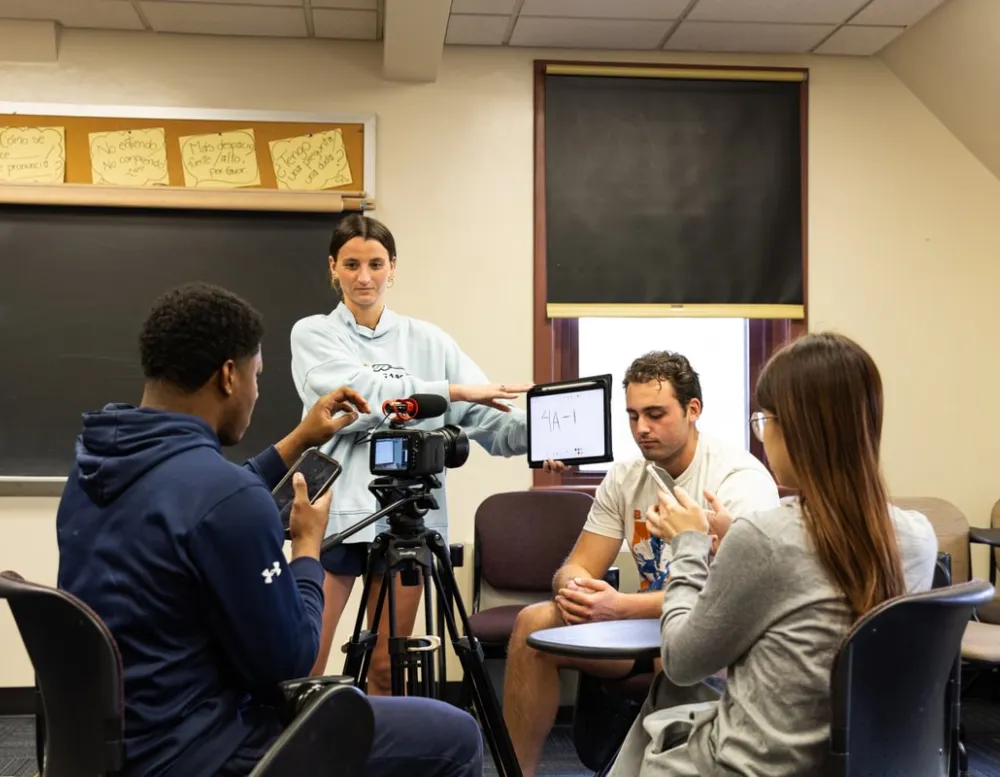
Cinema, television and other media, arguably the most ubiquitous and globalized cultural forms in our world today, are often not well understood and frequently understudied.
Gettysburg College offers a program and Cinema and Media Studies that will provide a broad liberal arts perspective on a powerful part of students’ lives today.
Majors & Minors
| Program Name | Program Type |
|---|---|
Cinema and Media Studies |
Major Bachelor of Arts |
Cinema and Media Studies |
Minor |
Why choose Cinema and Media Studies?
Students will learn to understand these media as not merely artistic forms, but also as cultural, economic and socio-political entities.
Opportunities
Think critically about film and other media, and effectively communicate this in written, oral, and visual forms.

Academics
Discover an engaging curriculum designed to cultivate knowledge and skills in the world of cinema and media.

Community of Experts and Professors
Cinema and Media Studies Department faculty invite students to turn academic inquiry into creative opportunity.

Cinema & Media Studies students at Gettysburg College can broaden their academic and cultural understanding through a range of recommended off-campus and study abroad programs. Each program below links directly to its host institution or program provider so you can explore course options, locations, and application details.
No more than 3 total courses in the major can come from off-campus courses.
| Program | Location / Host |
|---|---|
| Australia: Sustainability and Environmental Action | Australia |
| Czech Republic: Arts and Social Change | Czech Republic |
| Ghana: Social Transformation and Cultural Expression | Ghana |
| India: National Identity and the Arts | India |
| Indonesia: Arts, Religion, and Social Change | Indonesia |
| Morocco: Field Studies in Journalism and New Media | Morocco |
| Nicaragua: Youth Culture, Literacy, and Media | Nicaragua |
| Senegal: National Identity and the Arts | Senegal |
| American University in Cairo | Cairo, Egypt |
| University of Queensland | Australia |
| Temple University, Tokyo | Tokyo, Japan |
| DIS | Copenhagen, Denmark |
| Lancaster University | Lancaster, England |
| CIEE, Language and Culture | Berlin, Germany |
| IFSA-Butler | Buenos Aires, Argentina |
| LCWS, Washington Semester | Washington, DC |
Featured Courses
200 Level
Global overview of media industries in the world today. With a primary focus on cinema and TV, this course interrogates the political economy of the globalized media industries through economic, political, legal, and aesthetic analysis. Topics include the rise of multimedia, multinational conglomerates, followed by the impact of new technologies creating media convergence, and ending with sections on key global players in Europe and outside of the west. Course cross-listed as CIMS/IDS/PP 219.
Introduction to computer-mediated communication technologies (CMC) examining how digital media is used for interpersonal interactions and collective action. Social connections through various new media platforms (Facebook, Twitter, Instagram, and more) are explored to convey the possibilities and limitations of using digital platforms for social interaction. We will draw from various academic disciplines such as cultural studies, communications, and new media studies to critically evaluate the influence of social media on activism, politics, mainstream media, relationships and identity. Students will maintain an online blog throughout the semester and utilize social media during the course to engage with new media content.
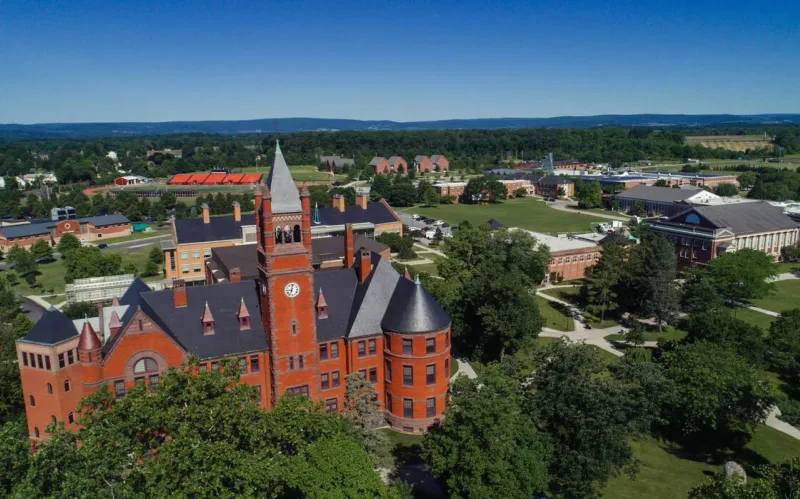
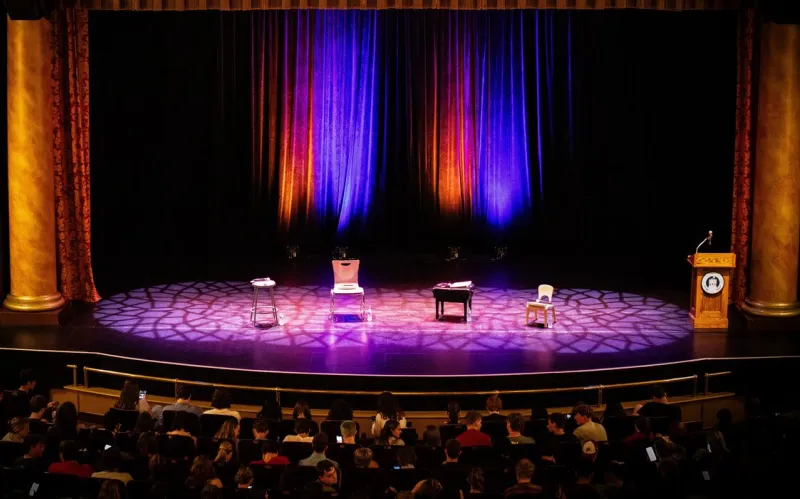

This program offers both a major and minor in Cinema and Media Studies that include approaches from both Cinema Studies and paradigms for studying popular culture commonly known as Cultural Studies. Students will understand these media as not merely artistic forms, but also as cultural, economic and socio-political entities.
Major and Minor Information
Ten courses are required for the CIMS major.
Core Courses
- CIMS 101 Intro Cinema & Media Studies
- CIMS/ IDS 219 Global Media Cultures
- CIMS 220 Video Production
- CIMS/ IDS 226 Media & Cultural Theory or CIMS 252 Film Aesthetics: Analysis & Theory
- A History of World Cinema course. CIMS 250 or CIMS 251
- Seminar Topics course: one from CIMS 350, 355, 361, 362, 363, 365, or 375
- CIMS 400 or CIMS 464 Senior Capstone Project
Three CIMS Electives
- Any courses with a CIMS prefix, including course courses not used above
- Any from the following: AFS 215, ANTH 215, ARTH 225, ARTS 160, 265, 266, AS 255/355, ENG 203, ES 319, GER 235, 260, 274, 280, IDS 217, 226, 252, MUS_CLAS 170, SOC 102, 204, 237, SPAN 322, SYS 219, THA 105, 120, 212, 214, 215, 282, WGS 218, 220
Notes
- No more than three courses in the major can come from off campus courses.
Six courses are required for the CIMS minor.
Core Courses
- CIMS 101 Intro Cinema & Media Studies
- A History of World Cinema course. CIMS 250 or CIMS 251
Four CIMS Electives
- Any courses with a CIMS prefix, included core courses not used above
- Any course from the following: AFS 215, ANTH 215, ARTH 225, ARTS 160, 265, 266, AS 255/355, ENG 203, ES 319, GER 235, 260, 274, 280, IDS 217, 226, 252, MUS_CLAS 170, 262, SOC 102, 204, 237, SPAN 322, SYS 219, THA 105, 120, 212, 214, 215, 282, WGS 218, 220
Notes
- Limit of two 100-level courses may count toward the minor requirments.
First Year Advising and Registration recommendations
The Cinema and Media Studies program offers both a major and a minor, examining film, television, and other media as cultural, economic, and socio-political forms—not just artistic ones.
Common first-year courses
- CIMS 101 Introduction to Cinema and Media Studies (fall and spring); take as early as possible
- CIMS 220 Video Production (fall and spring)
Available Courses
100 Level
Introduction to cinema and other media such as television. This course provides an overview of the basic properties of cinema and television as visual media. Topics include technological/economic factors, form and style, plus a basic introduction to the deeper issues in both cinema studies and cultural studies, the main paradigm used to study television and other media as popular art forms.
200 Level
Graphic novels and their film adaptations examination. Graphic Novels to Film investigates the linkage between graphic literature, especially in its comic narrative form, and cinema. Through readings and screenings, the course seeks to compare and contrast the storytelling techniques unique to graphic novels with cinematic language systems.
This course provides a close look at Italy’s cinematic tradition from the perspectives of history, aesthetics, and cultural studies. Topics include Italian Neorealism, the Spaghetti Western, the Mafia, and the "cinema d’autore." By employing an interdisciplinary approach, students analyze internationally acclaimed films by directors such as Federico Fellini, Sergio Leone, and Paolo Sorrentino. In addition, they investigate Italian history and culture as they delve into issues like migration, gender, race, political corruption, and organized crime. In English. ITAL 291 and CIMS 291 are cross-listed.
This course will introduce students to the culture of the Arab World and its diasporas through the study of major films from Egypt, Morocco, Palestine, Lebanon, and others. We will focus on popular realist, feminist, and postcolonial Arab films. The topics of discussion will range from modernity, nationalism, secularism, Islam, politics, gender and human rights or censorship. Different cinematic genres, themes and common trends will be the focus of this course. Students examine the socio-political and cultural contexts in which Arabic films operate and which are necessary for their critical comprehension. Films are also studied as artistic works.
Introduction to the cinemas of Europe of the twentieth and twenty-first centuries. Study of well-known movements such as Weimar Expressionism, Italian Neorealism, French Nouvelle Vague, etc. The course challenges the widely accepted binary opposition between European Art Cinema and Hollywood by also considering popular genre cinema. Similarities and differences between national cinemas are studied in their respective historical, cultural, and commercial contexts. Conducted in English. Cross-listed with Cinema and Media Studies.
A robust cinema industry formed a cornerstone of Nazi propaganda during the Third Reich in Germany. This course explores how Hitler, Goebbels, and the Nazis deployed films to advance sinister ideologies in the 1930s and 40s in Germany. Conversations will focus on explaining the susceptibility of mass media—and specifically film—to political manipulation. Further, we will examine the ongoing fascination with Nazis on the silver screen in both German and American contexts. GER 274 and CIMS 274 are cross-listed.
Study of a variety of directors, genres, techniques and other aspects of film and filmmaking.
Study of thorny issues concerning authorship for both film and TV. This courses critiques the various ways the ideas of authorship have been used both past and present. It also contextualizes a wide range of film and TV soothes such as Francois Truffaut, Alfred Hitchcock, John Ford, Federico Fellini, Alfonso Cauron, Terrence Malick, Alexandr Sokurov, Lucrecia Martel, Wong Kar-wai, Shonda Rhimes, David Chase, Sam Esmail and Jenji Kohan.
This course is a study of contemporary American filmmakers, artists who have produced many of the most distinctive independent films to have appeared in the U.S. in recent decades, including John Sayles, Jim Jarmusch, Spike Lee, Charles Burnett, Julie Dash, Todd Haynes, Kelly Reichardt, Allison Anders, Wayne Wang, and the Coen Brothers. The course follows a trajectory from low-budget independent productions, to the formally innovative, to the politically radical, to the offbeat and cultish, and to the commercially conventional. Prerequisite: none; CIMS 101 is recommended
Overview of Japanese Media past and present. This course explores Japanese cinema and other media through the twin lens of culture and economics and how these two interact in a modernizing East Asian setting. It examines why Japanese cinema is arguably the most successful national cinema historically. It also explores how Japan went from a national to a global media entity, with special emphasis place on J-Horror, J-Drama and anime.
Discussion of the aesthetics and political function of violence in literature and visual culture. Topics include cultural negotiations of hierarchies of power in the family, abuse, trauma, terror, war and the representation of the Holocaust. Shorter secondary readings will complement the close reading of German literary texts, film and TV productions, and the discussion of digital games and their (alleged) contribution to the propensity for violence. CIMS 260 and GER 260 are cross-listed.
Video games are one of the most important and widespread forms of engaging in culture today. But the question of why we play has fascinated thinkers for centuries: Over 200 years ago, Friedrich Schiller claimed that “man is only fully a human being when he plays”, that playing is a unique way of expressing creativity, imagination, and emotions, and thus alleviates social pressure.
This course explores history and cultural significance of playing both analog and video games. It examines the ways in which they are shaped by and shape cultural values, identities, and power relations. The class explores principal questions, historical developments, and considers the contemporary contexts in which videogames have emerged and evolved, as well as the diverse communities and cultures that participate in videogame culture. It draws on a range of methodological approaches from fields such as media studies, German cultural studies, anthropology, and critical theory. GER 259 and CIMS 259 are cross-listed.
In-depth study of a range of issues revolving around film genres. Topics include basic theories of film genres (including their deep cultural implications), followed by a historical overview of comedy and horror using philosophical, industrial, socio-political, psychoanalytic and postmodern approaches. Exemplary films from both genres are shown in labs, including both American and non-American examples for sake of comparison.
Exploration of world cinema from the end of World War II up to the present day. In labs, students watch a film or films representing a particular time period and/or larger transnational trends, including films from Hollywood, Europe (i.e. Italy, France, Germany, Denmark), Africa (i.e. Senegal), the Middle East (i.e. Iran), East Asia (i.e. Japan, South Korea). In lectures, these films are analyzed and discussed in light of every possible contextual factor (cultural, political, industrial, transnational, etc.), which explains why films are made in certain ways under different conditions including how cinema is a leading force in cultural globalization.
Exploration of the origins and evolution of world cinema from its official inception in 1895 up to the end of World War II. Notable developments, such as the invention and diffusion of cinema, early Italian features, French Impressionism, German Expressionism, Soviet Montage, Japanese cinema in the 1930's and the Rise of American cinema as the dominant economic force, are all covered. In lab, students watch a film or films that represent a particular time period and/or a particular national or regional cinema. In lectures, these films are analyzed and discussed in light of every possible contextual factor (cultural, national, political, industrial, etc.) which explains why films are made in certain ways under different conditions.
Study of representations of the Holocaust across film genres and in other media. Both the events of the 1930s-1940s (Nazi persecution, ghettos, camps, killing centers) and the field of Holocaust memory and representation are a central focus. Topics include: documentary films, propaganda, resistance/protest, humor/comedy, commodification, trials, revenge fantasies, and stories told and untold. Films are in a number of languages (English, German, Polish, Hebrew, Hungarian, French, Italian, etc.). Course conducted in English. CIMS 235 and GER 235 are cross-listed.
Cultural approach to studying the 1920s and early 1930s before the Nazi Party’s rise to power, with a focus on Weimar film, photography, and art. Different texts and media forms offer insight into urbanization, post-war trauma, political unrest, revolution, inflation, new sexual freedoms, and other aspects of the encounter with modernity. Topics include cafés, cabarets, hotels, fashion, journalism, jazz, avant-garde movements, as well as the experiences of women, LGBTQ individuals, Jews, and other minority groups. Conducted in English. GER 231 and CIMS 231 are cross-listed.
Introduction to computer-mediated communication technologies (CMC) examining how digital media is used for interpersonal interactions and collective action. Social connections through various new media platforms (Facebook, Twitter, Instagram, and more) are explored to convey the possibilities and limitations of using digital platforms for social interaction. We will draw from various academic disciplines such as cultural studies, communications, and new media studies to critically evaluate the influence of social media on activism, politics, mainstream media, relationships and identity. Students will maintain an online blog throughout the semester and utilize social media during the course to engage with new media content.
Investigation of the major theories that guide the study of media texts and systems. This course aims to enhance the student’s ability to analyze film, radio, television, the Internet and video games from a perspective that emphasizes the cultural significance of these media. Through an overview of thinkers from traditions including structuralism, Marxism and British Cultural Studies, students will learn to write about specific texts in a manner that engages deeply with broader traditions of social thought.
Course explores various images of women as constructed for the male and female spectator in both dominant and independent film. Traditional ways in which women have been represented in film are examined critically through the use of feminist theories. Course aims to examine how various feminist filmmakers challenge the traditional uses of the female voice in their own films. Films from other cultures than the U.S. are included. WGS 220 and CIMS 225 are cross-listed.
Introduction to the basics of video production. This course provides the basic hands-on skills and requisite conceptual backing to understand the entire production process for video. Students learn the basic properties of camera optics, mise-en-scene, lighting, sound design, editing, screen-writing, narrative, documentary and experimental forms. Students also come away with basic terminology and concepts that apply over a wide range technical situations, as well as how the medium is used in varying social, political and historical contexts.
Global overview of media industries in the world today. With a primary focus on cinema and TV, this course interrogates the political economy of the globalized media industries through economic, political, legal, and aesthetic analysis. Topics include the rise of multimedia, multinational conglomerates, followed by the impact of new technologies creating media convergence, and ending with sections on key global players in Europe and outside of the west. Course cross-listed as CIMS/IDS/PP 219.
An examination of how the Civil War has been presented by various American filmmakers from the silent era to the present. Students are asked to consider the various themes common to Civil War films: violence, race, politics, and iconography, among others. The class serves as an introduction to cinematic language systems while using Hollywood images of the Civil War as its central documents for analysis. Course not offered every year. IDS 217 and CIMS 217 are cross-listed.
Pop culture provides us with the stories, images, and scripts that enable us to imagine and practice racial identities. These images and practices, in turn, are imbued with gender and sexuality values and characteristics as well. The racial and ethnic norms generated by popular culture are reproduced in the ways in which audiences both perform and navigate racial terrain in their own lives. Media consumers absorb these norms in the ads they see, the movies/television they watch, and the music they listen to. This course enables students to do critical thinking about these images, practices, and stories. AFS 215 and CIMS 215 are cross-listed.
Study of various types of films and what makes them complete works of art resulting in certain aesthetic effects. This course provides various critical, analytical and theoretical models which help students understand a single film in its entirety, noting how various discrete parts make up a single aesthetic whole. The films shown in labs include popular Hollywood films, independent films, European art cinema, Asian cinema and others. Students are asked to write in-depth analyses of these films, and to note their own aesthetic responses. Prerequisite: Film 101 or permission of the instructor.
300 Level
Overview of Japanese Media past and present. This course explores Japanese cinema and other media through the twin lens of culture and economics and how these two interact in a modernizing East Asian setting. It examines why Japanese cinema is arguably the most successful national cinema historically. It also explores how Japan went from a national to a global media entity, with special emphasis place on J-Horror, J-Drama and anime.
A study of comparative national cinemas. This course is an in-depth look at the notion of "national cinemas." This concept seems straightforward as numerous film courses and film festivals are organized around it. But there are numerous issues raised by trying to define a national cinema, none of which are easily resolved. This course explores these issues by comparing four distinct "national" responses to a globalizing medium. Prerequisite: One course in Film.
Study of thorny issues concerning authorship for both film and TV. This courses critiques the various ways the ideas of authorship have been used both past and present. It also contextualizes a wide range of film and TV soothes such as Francois Truffaut, Alfred Hitchcock, John Ford, Federico Fellini, Alfonso Cauron, Terrence Malick, Alexandr Sokurov, Lucrecia Martel, Wong Kar-wai, Shonda Rhimes, David Chase, Sam Esmail and Jenji Kohan.
This course is a study of contemporary American filmmakers, artists who have produced many of the most distinctive independent films to have appeared in the U.S. in recent decades, including John Sayles, Jim Jarmusch, Spike Lee, Charles Burnett, Julie Dash, Todd Haynes, Kelly Reichardt, Allison Anders, Wayne Wang, and the Coen Brothers. The course follows a trajectory from low-budget independent productions, to the formally innovative, to the politically radical, to the offbeat and cultish, and to the commercially conventional. Prerequisite: none; CIMS 101 is recommended
In-depth study of a range of issues revolving around film genres. Topics include basic theories of film genres (including their deep cultural implications), followed by a historical overview of comedy and horror using philosophical, industrial, socio-political, psychoanalytic and postmodern approaches. Exemplary films from both genres are shown in labs, including both American and non-American examples for sake of comparison.
Study of a variety of directors, genres, techniques and other aspects of film theory. Prerequisite: One course in Film.
400 Level
Intensive capstone experience for senior CIMS majors. This seminar will aim to reinforce the main learning outcomes of the Cinema and Media Studies major, such as visual literacy, contextual/historical analysis, theoretical analysis, plus issues regarding globalization and media. Select examples of media and readings will be used every week to cover different topic areas with assessment exams. In addition, students will each do their own capstone projects, whether a production project, a research project or a combination of the two.
Individualized tutorial counting toward the minimum requirements in a major or minor, graded A-F
Individualized tutorial not counting in the minimum requirements in a major or minor, graded A-F
Individualized tutorial not counting in the minimum requirements in a major or minor, graded S/U.
Individualized research counting toward the minimum requirements in a major or minor, graded S/U
Individualized research not counting in the minimum requirements in a major or minor, graded A-F
Required Capstone for the Cinema and Media Studies Major
Internship counting toward the minimum requirements in a major or minor, graded A-F.
Summer Internship graded A-F, counting in the minimum requirements for a major or minor only with written permission filed in the Registrar's Office.
Cinema & Media Studies
More In Cinema and Media Studies
Ready to Do Great Work?
