
Communication Studies
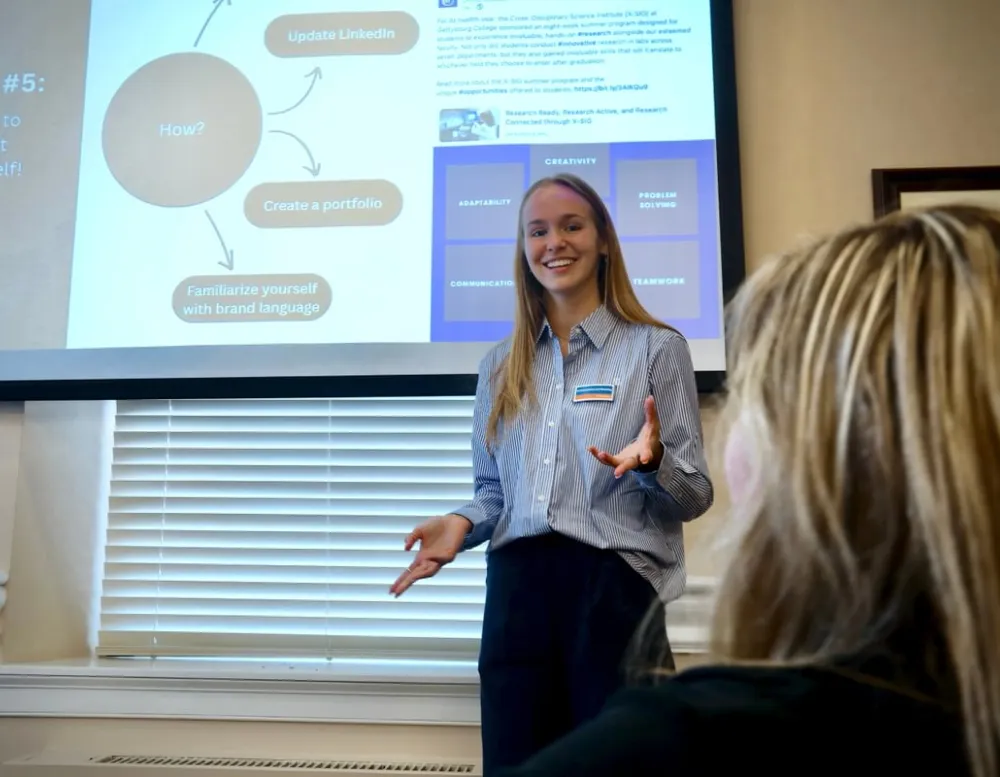
Learn the power of storytelling while sharpening your ability to think critically, communicate effectively, and make a real impact on the world.
Our Communication Studies major explores how messages influence individuals, institutions, and society. Through a blend of theory and practice, students develop essential skills in media analysis, digital content creation, public speaking, and more.
Majors & Minors
| Program Name | Program Type |
|---|---|
Communication Studies |
Major Bachelor of Arts |
Communication Studies |
Minor |
Why choose Communication Studies?
Communication is essential—in business, in media, in relationships, and in society. Studying communication helps you:
- Understand how messages influence behavior, culture, and policy
- Gain transferable skills in writing, speaking, digital media, and critical thinking
- Prepare for a wide range of careers where effective communication is key
- Become a thoughtful, informed, and persuasive communicator in any setting
Whether you're interested in media production, corporate communications, advocacy, or education, a communication degree gives you the tools to lead and innovate.
Why choose Communication Studies at Gettysburg
Opportunities
Make your voice matter. Join a community of thinkers, creators, and changemakers in the Communication Studies program at Gettysburg College and explore how communication shapes—and is shaped by—the world around us.

Academics
The Communication Studies major is structured to help students build a strong foundation in communication theory while gaining practical, real-world experience.

Community of Experts and Professors
Our interdisciplinary program—with faculty from everywhere from music to data science— both highlights how communication is infused into every human endeavor and means our students leave as nimble/adaptable/flexible storytellers.

Experiential Learning
In our Communication Studies program—especially one geared toward prospective students exploring real-world applications—students can expect to:
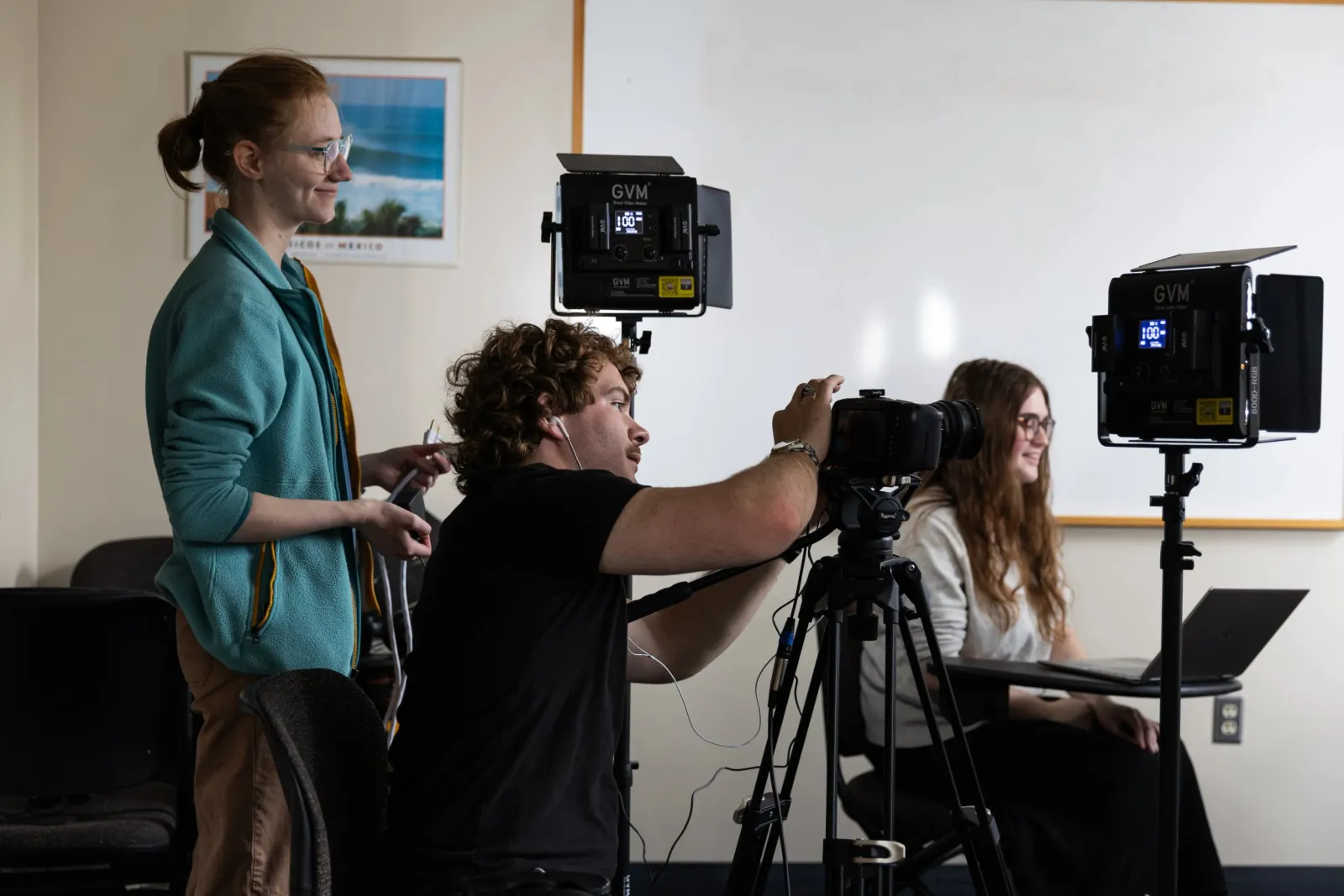
- Create podcasts, videos, and social media content
- Get hands-on experience making public-facing work in on-campus or community-based organizations
- Work with faculty who are invested in their success
- Develop mastery in the skills that 4 out of 5 employers wish they saw more of in their job candidates
- Manage College social media accounts and provide live event coverage
Featured Course
Visit Curriculum tab for a comprehensive list of all available courses
100 Level
This course provides a foundational overview of the field of communication studies, tracing the historical evolution of communication practices and theory. The course will introduce key figures and concepts in communication theory, analyze the profound impact of technological advancements, and explore several areas of specialization in the diverse landscape of contemporary communication studies (e.g., interpersonal communication, political communication, and/or digital media communication).



The Communications Studies curriculum at Gettysburg College is comprised of coursework in four categories.
- Core courses provide a grounding in the foundational concepts, research approaches, and critical frameworks of communication studies.
- Analysis courses focus on understanding communication in various contexts—social, cultural, political, and institutional.
- Praxis courses are Hands-on courses in which students create messages across multiple modalities.
- The practicum is a full-credit internship where students apply their skills in a professional setting, gaining valuable experience and networking opportunities.
Major and Minor Information
Ten courses are required for the Communication Studies major.
Core Courses
- COMM 110 Introduction to Communication Studies, with a grade of C or higher.
- Recommended to be taken in First or Sophomore year.
- Methods Course: Choose one from CIMS 226 Media and Culture Studies or ENG 297 Introduction to Book History. Must be passed with a grade of C or higher.
- Recommended to be taken in Sophomore or Junior year
Three Analysis Courses
- Three from the following: AFS 180/280, AFS/CIMS 215, CIMS/GER 260, CIMS/IDS 219, 230, COMM 241, COMM 250, DS 220, DS/SOC 245, ENG 244, ENG 309 Topic(s) Rhetorics of Online Writing, Rhetorics of Space and Place, Or Rhetorics of Documentary Film, ES 225, GER /IDS 259, GER /CIMS 274, HIST 201, HIST 241, IDS 208, IDS 243, IDS 252, MUS_CLAS 135, MUS_CLAS 170, POL 233, PHIL 153, PHIL 351, SOC 204, SOC 237, SYS 219, WGS 210 Topic: Queer Representation in Media.
Three Praxis Courses
- One course must focus on Written Communication. Choose from ENG/COMM 141, ENG 201, ENG/COM 203, ENG 307, ES 241, ES 242, SYS 228.
- One course must focus on Audio Visual Communication. Choose from ARTS 160, CIMS 220, COMM 221, DS 311, ENG 200 Topic(s): Writing Across Media, or Remix and Remediation, ENG 309 Topic(s): Writing with Sound, or Art of Public Speaking, ES 230, MUS_CLAS 262.
- One additional course focused on production of communicative texts from either category.
Practicum and Capstone
- COMM 399 Practicum
Full-credit internship arranged through your advisor. - CIMS 400 Senior Seminar in Cinema and Media Studies
Notes
- With the approval of the department up to four courses from an off campus affiliated program may be counted in the major in the areas of Analysis and Praxis.
- Limit of two courses maybe shared by the Communications Studies major and any other major
Six courses are required for the Communication Studies minor.
Core Courses
- COMM 110 Introduction to Communication Studies
- Choose one Methods course from CIMS 226 Media and Culture Studies or ENG 297 Introduction to Book History
Two Analysis Courses
- Two from the following: from the following: AFS 180/280, AFS/CIMS 215, CIMS/GER 260, CIMS/IDS 219, 230, COMM 241. COMM 250, DS 220, DS/SOC 245, ENG 244, ENG 309 Topic(s) Rhetorics of Online Writing, Rhetorics of Space and Place, Or Rhetorics of Documentary Film, ES 225, GER /IDS 259, GER /CIMS 274, HIST 201, HIST 241, IDS 208, IDS 243, IDS 252, MUS_CLAS 135, MUS_CLAS 170, POL 233, PHIL 153, PHIL 351, SOC 204, SOC 237, SYS 219, WGS 210 Topic: Queer Representation in Media.
Two Praxis Courses
- One course must focus on Written Communication. Choose from ENG/COMM 141, ENG 201, ENG/COMM 203, ENG 307, ES 241, ES 242, SYS 228.
- One course must focus on Audio Visual Communication. Choose from ARTS 160, CIMS 220, COMM 221, DS 311, ENG 200 Topic(s): Writing Across Media, or Remix and Remediation,, ENG 309 Topic(s): Writing with Sound, or Art of Public Speaking, ES 230, MUS_CLAS 262.
Notes
- With the approval of the department up to two courses from an off campus affiliated program may be counted in the major in the areas of Analysis and Praxis.
- No more than two 100-level courses may be used to fulfill minor requirements.
- Courses taken under the S/U grading option do not count toward the minor.
- COMM 399 Practicum does not count toward the Communication Studies minor requirements, but students in the minor are welcome to take the course.
First Year Advising and Registration recommendations
Communication Studies explores the power of storytelling and the ways messages influence individuals, institutions, and society. Both the major and minor develop skills in media analysis, digital content creation, public speaking, and more – engaging theory and practice in equal measure.
Common first-year courses
Core: start here
COMM 110 Introduction to Communication Studies
Most program courses have no prerequisites. Majors take three core courses, three analysis courses, and three praxis courses.
Cross-listed courses from other departments also count toward the major
Africana Studies · Cinema and Media Studies · English · Environmental Science · German Studies · History · Music · Philosophy · Sociology · Women, Gender, and Sexuality Studies
Available Courses
100 Level
This course provides a foundational overview of the field of communication studies, tracing the historical evolution of communication practices and theory. The course will introduce key figures and concepts in communication theory, analyze the profound impact of technological advancements, and explore several areas of specialization in the diverse landscape of contemporary communication studies (e.g., interpersonal communication, political communication, and/or digital media communication).
Designed to provide you with experience in the analysis of text & media as expressive, aesthetic mediums, this course uses American Sport as its primary area of analysis. The course will be a combination of technical analysis, literary discussion, cultural commentary, and writing. Organized sports have formed a major source of entertainment, economics, and political and personal identity for countless people. Our aim is to answer a single overarching question, "Why is sport such an all-consuming part of American culture?"
COMM 141 and ENG 141 are cross-listed.
200 Level
Instruction in basic skills for writing news articles. Students develop an understanding of what makes news; how to conduct interviews and gather information; how to construct articles; and how to analyze news stories in a digital era. Students will develop a keener understanding of what makes for good journalism and how to identify articles that fall short of standards. COMM 203 and ENG 203 are cross-listed.
Students will be introduced to a variety of social media tools and platforms and learn how communication professionals may use them strategically for information gathering, publicity, promotion and audience engagement. The course is designed to broaden students’ understanding of social media principles while providing practical experience in social media planning, content creation and analytics.
Examines advertising in commercial media including outdoor, electronic
media, and Internet platforms. Theory and practical application in media advertising, management, and research are explored. Media competitive advantages and disadvantages as well as advertising techniques are analyzed.
300 Level
400 Level
Internship counting toward the minimum requirements in a major or minor, graded A-F.
Communication Studies

More In Communication Studies
Ready to Do Great Work?
