
History
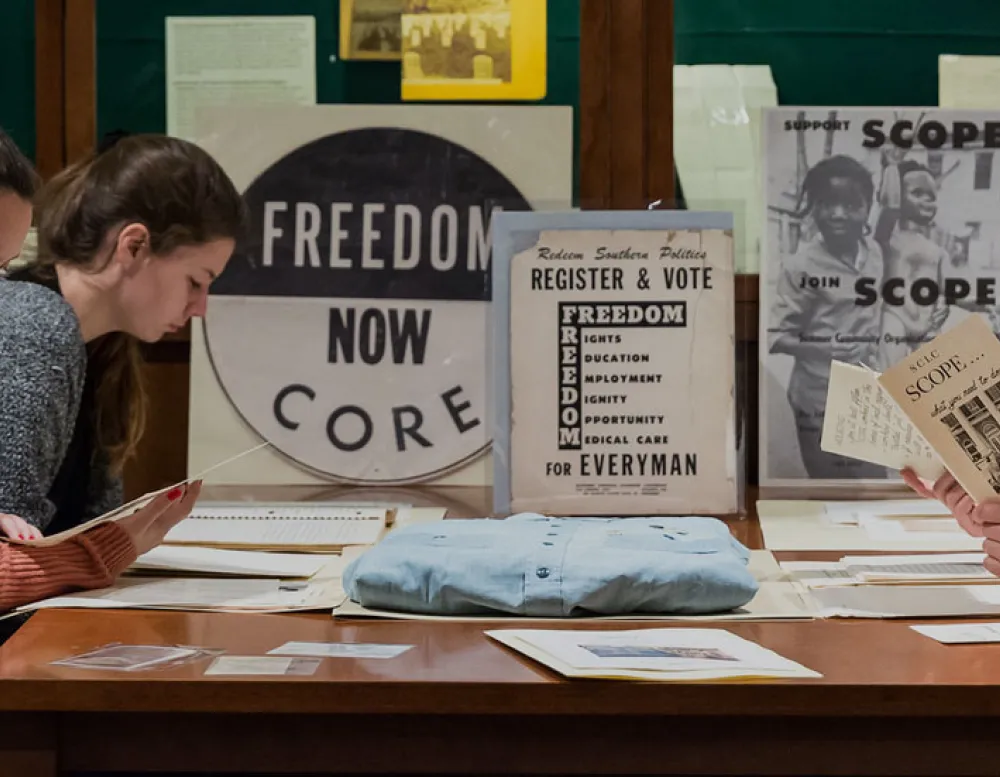
If you want to help solve the world’s pressing societal challenges,
you'll first need to understand their context. As a History major or minor, you'll compare societies across time and geography to gain insight into the diversity of the human experience and your own place in the world.
Majors & Minors
| Program Name | Program Type |
|---|---|
History |
Major Bachelor of Arts |
History |
Minor |
Why study History?
You’ll hone your investigation and information literacy skills by exploring and analyzing varied sources across a range of periods and developments in the Western and non-Western worlds. Your coursework will take place both inside and outside the classroom and will include research, collaboration with faculty, and hands-on fieldwork.
As a graduate, you'll be well prepared for graduate study or careers in government, non-profits, or the private sector, as well as for a lifetime of informed citizenship.
Why study History at Gettysburg
Opportunities
Find out how your History studies at Gettysburg can open up career opportunities in various fields.

Academics
Discover ways to align your knowledge of history with the skills you'll need for careers in this diverse field.

Community of Experts and Professors
Professors in the History Department serve as resources for academic and professional pursuits in history-related fields.

A variety of special opportunities for history majors can significantly enrich a student’s undergraduate experience. For example, the Civil War Institute, directed by a member of the history faculty, provides a number of students with work related to the Institute's summer program; Civil War Era Studies offers The Gettysburg Semester as well as a minor program.
Our history minors and history majors have ample opportunities to engage in meaningful service to their communities through the Center for Public Service, get connected to hands-on public policy experiences at the Eisenhower Institute, or contribute to the student-led Gettysburg Historical Journal and Gettysburg College Journal of the Civil War Era.
Wherever your research leads you, the Gettysburg College history department is here to support you.
“Faculty research forms the core of my teaching endeavors and pedagogical objectives… It’s important for students to see that I am an active scholar, and that the books and ideas we engage with in class are being created here at Gettysburg College. I, like many of my colleagues, am producing the knowledge that contributes to their education.”
— Prof. Jim Downs
Civil War Institute
Open to the public and all Gettysburg students, the Civil War Institute is an exciting organization that promotes dialogue about the history of the Civil War era. To provide a unique platform, the Civil War Institute offers all audiences week-long Civil War conferences and educational programming, which includes exhibits, lectures, and performances.
Students enrolled in the bachelor’s in history degree program may find the Civil War Institute particularly useful as they search for hands-on research topics, internships, or information about a variety of professional careers in the field of history.
Experiential learning
History students have endless opportunities to engage in hands-on learning at Gettysburg. Whether that’s enrolling in a study abroad program to gain course credit towards your history major or completing a summer internship at the Saratoga Battlefield National Park, you have options.
Career preparation
Graduates of the bachelor’s in history degree program are prepared for graduate school or immediate entry into the workforce. Moreover, the history department’s curriculum and experiential learning opportunities provide you with the tools you need to succeed in fields such as education, nonprofit, law, government, or marketing.
Gettysburg history graduates have held jobs in the following positions:
- Assistant state’s attorney
- Foreign service officer for the U.S. Department of State
- Museum director
- Press secretary for the Maryland Governor
- Writer/editor for the National Archives
All history majors and history minors are encouraged to visit the Center for Career Engagement for insight into shaping their career path.
Student life opportunities
Along with the Civil War Institute and the Eisenhower Institute, Gettysburg offers a fully student-led history club that encourages members to engage in historical conversations. To encourage further insightful historical discussions, the Gettysburg College Historical Society is open to students of all majors.
Featured Courses
100 Level
Course focuses on cultural and economic interactions between Europe, Asia, the Muslim World, and the Americas, and places great 'discoveries' of Western history--the new World, conquests, the 'rebirth' of antiquity, and the beginnings of modern science-within their context of cross-cultural exchange. Students consider literary, scientific, and religious influences on individual encounters, as well as historians' explanations for long-term global realignments during a dynamic period in world history. Offered annually.
200 Level
This class introduces students to ideas, debates, and best practices in the field of public history. Public history is a term that defines a constellation of historical practices outside of the academy, but most often refers to historians who work in institutions such as museums, historic sites, preservation offices, archives, and cultural resource agencies. This course will introduce students to the historical origins of public history in the United States and current ideas about the practice of public history. Offered annually.
A critical examination of the literary, filmic, historical, and memorial representations of Africa. The course traces and analyzes the politics that informs the cultural constructions of Africans as people who live in particular spaces and times. The course compares various African(ist) literary, cinematic, and historical traditions and maps out the areas of convergence and differences as far as the representation of Africa is concerned. Engaging with history as a discipline, it highlights alternative ways in which intellectuals and laypeople have laid claim to the interpretation of the African past. Finally, moving away from Euro-centrism, the course emphasizes cultural productions of African writers, film directors, and public historians to show that Africans are not just subjects of history; they are equally agents of historical representation in its various guises. AFS 262 and HIST 273 are cross-listed. Offered as staffing permits.
History News


History
Ready to Do Great Work?
